Top 10 Benefits of Using a Network Hard Drive for Your Home or Office?
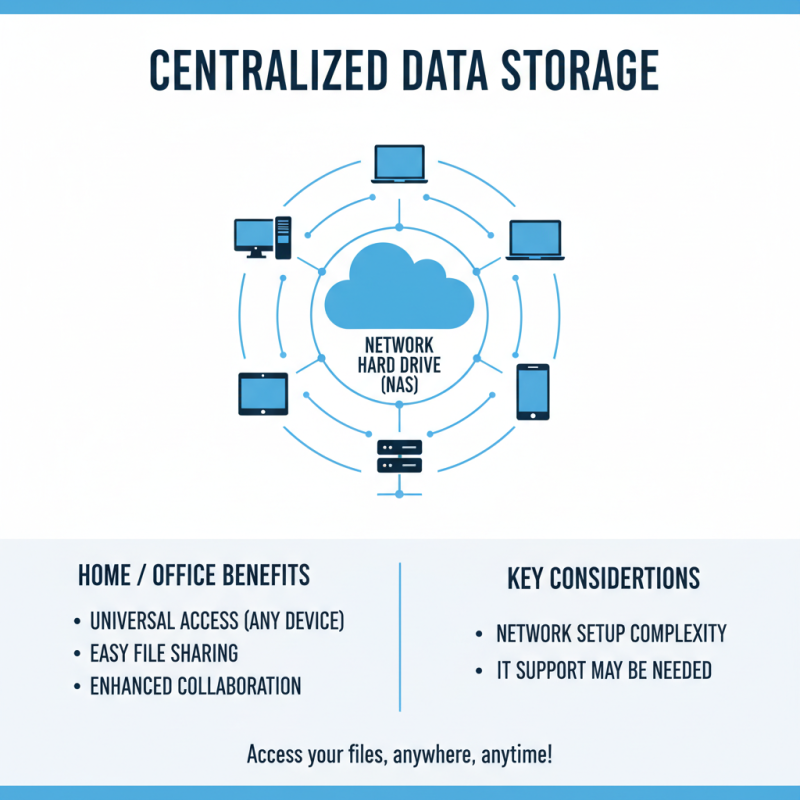
In today's digital age, a Network Hard Drive (NHD) serves as a vital asset for both home and office use. It transforms how we store and access data. Imagine having all your important files centralized in one secure location. This means greater organization and easy sharing among devices, enhancing collaboration.
Beyond convenience, an NHD offers significant backup solutions. It protects your data from accidental loss. However, it’s not without challenges. Setting up and managing an NHD requires a learning curve. Sometimes, users find themselves overwhelmed by the options available. Yet, the investment often outweighs these initial hurdles.
Moreover, an NHD allows remote access. This feature is invaluable for those working from home or while traveling. Imagine accessing your files from anywhere with an internet connection. This flexibility enhances productivity but may raise security concerns. Users must be proactive in securing their data. Overall, the benefits of a Network Hard Drive are clear, but thoughtful implementation is essential.

Advantages of Centralized Data Storage in Homes and Offices
Centralized data storage has become essential in both homes and offices. By utilizing a network hard drive, users can access files from any connected device. This setup enhances collaboration among team members. Everyone can easily share documents without the hassle of separate drives. However, network configurations can be tricky at times and may require IT support.
In a household, centralized storage simplifies media management. Families can store photos, videos, and music in one place. It eliminates the chaos of scattered files across multiple devices. Nevertheless, if your network speed is slow, accessing large files can be frustrating. Regular updates and maintenance are necessary to keep everything running smoothly.
One significant advantage is data security. Users can implement passwords and encryption to protect sensitive information. Yet, if backups are not managed properly, precious data can be lost. It's crucial to regularly check the backup schedules. This consistent attention ensures that data is safe. Embracing centralized storage can transform how we organize data, even if challenges arise along the way.
Enhanced Data Backup and Recovery Solutions with Network Hard Drives
Network hard drives offer exceptional data backup and recovery solutions. This technology simplifies the process of safeguarding your essential files. With automatic backup settings, your data stays secure without manual intervention. Each device on the network can access backups easily. This connectivity streamlines workflow and reduces risks.
Imagine having all your important documents and family photos stored in one location. Network hard drives provide peace of mind when disaster strikes, such as accidental deletions or hardware failures. However, it's essential to remember that reliance on one storage solution can be risky. Redundancy is crucial. If the drive fails, your data could be at stake.
Moreover, setting up a network hard drive can be challenging for some users. The initial configuration may take time and require technical knowledge. Not everyone feels comfortable navigating network settings. This hurdle can diminish the potential benefits. Addressing these issues early can lead to a more secure data experience for both home and office users.
Improved Accessibility and File Sharing Across Multiple Devices
In today’s fast-paced environment, accessibility and file sharing are crucial for both home and office setups. A network hard drive (NHD) significantly enhances these capabilities. According to a recent industry report, over 70% of businesses experience improved collaboration when using shared storage solutions. With an NHD, users can access files from any device connected to the network. This convenience eliminates the frustration of transferring files through USB drives or emails.
The flexibility of an NHD enables multiple users to access the same files seamlessly. Research indicates that teams can save up to 30% of their time by using centralized file storage. Imagine a team of designers working on a project simultaneously. Each member can view and edit files in real time, reducing delays and miscommunication. However, reliance on network devices raises concerns about potential data breaches and the importance of robust security measures.
Not everyone might be aware of the potential downsides. Compatibility issues can arise with older devices, hindering easy access. Additionally, occasional network outages could disrupt file sharing. Yet, with proper planning and backup strategies, these challenges can be overcome. NHDs can elevate productivity while posing some risks worth considering.
Increased Security Features for Protecting Sensitive Information
In today’s digital age, safeguarding sensitive information is crucial for both home and office environments. A network hard drive offers enhanced security features that create a safer data management system. These devices often come equipped with strong encryption protocols. This encryption protects your files from unauthorized access. It ensures that even if someone gains physical access to the drive, your data remains secure.
Moreover, network hard drives allow for user access controls. You can set permissions for different users, limiting who can see specific files. This is particularly beneficial in an office setting. It helps maintain confidentiality of important documents. However, not all users may be familiar with these features. It can lead to unintentional breaches if settings are misconfigured. Regularly reviewing user permissions is a necessary practice.
Additionally, many network hard drives offer automatic backup functions. These can protect sensitive information against loss. However, reliance on automation can be tricky. If backups are not monitored, they may fail at critical moments. Thus, it’s essential to develop a reliable backup strategy. Ensuring that data is regularly backed up can greatly reduce risks.
Top 10 Benefits of Using a Network Hard Drive
Cost-Effective Storage Solution for Growing Data Needs
In today's digital age, data continues to grow exponentially. According to a recent report by IDC, the global data sphere is expected to reach 175 zettabytes by 2025. This surge creates a pressing need for effective storage solutions. A network hard drive provides an affordable way to manage increasing data without breaking the bank. With prices of traditional storage systems skyrocketing, a simple network hard drive emerges as a more practical choice.
Notably, network hard drives offer scalability. Users can start with a smaller capacity and upgrade as their storage needs evolve. This flexibility is crucial in environments where data storage is unpredictable. However, choosing the right configuration can be tricky. Many users may struggle with setting up access permissions or managing backups effectively. In fact, 65% of home users report difficulties in managing shared drives. Finding the balance between ease of use and maximum storage capability can be a challenge.
Data accessibility is another critical benefit. Network hard drives enable multiple users to access files from any device. Yet, this accessibility has its drawbacks. Poor file organization can lead to inefficiencies. A significant portion of users waste time looking for files, with some surveys indicating that people spend up to 30% of their workday locating documents. Thus, while network hard drives present cost-effective solutions, careful planning is essential for optimizing their benefits.