What is Juniper ACX and How Does It Benefit Network Solutions?
Juniper ACX is a versatile networking solution designed to enhance connectivity and operational efficiency. In today's fast-paced digital landscape, businesses need reliable network solutions to manage increasing data demands. The ACX series from Juniper offers a range of routers tailored to meet the needs of various network environments.
With its robust architecture and high performance, Juniper ACX stands out in the market. It incorporates advanced features, such as high availability and low latency, which are crucial for service providers and enterprises alike. However, implementation can be challenging, and users must consider their specific requirements before deployment.
Understanding the full potential of Juniper ACX requires a focus on both hardware capabilities and software integration. Organizations can benefit from a proactive approach to network design, ensuring that they harness all available features. While Juniper ACX provides numerous advantages, it is essential to remain aware of potential shortcomings. Continuous evaluation and adaptation will ensure optimal performance and alignment with evolving business goals.

What is Juniper ACX?
The Juniper ACX series is a vital component in modern networking solutions. Designed primarily for service providers, it enables high-speed transport across expansive networks. This series showcases advanced capabilities, such as robust routing and efficient bandwidth management. According to industry reports, over 70% of network operators regard equipment efficiency as a priority. Their investment choices reflect this, highlighting the importance of high-performance systems.
The ACX series also emphasizes scalability. As networks grow, the need for adaptive solutions becomes critical. Research indicates that network traffic is expected to triple by 2026. This surge necessitates equipment that can expand without extensive overhaul. The ACX draft features modular designs that allow operators to fine-tune their systems in response to changing demands.
Moreover, the ACX series offers energy-efficient options. In today's economy, companies face pressure to reduce operational costs. This series supports sustainable practices by minimizing energy consumption. Yet, some users report installation challenges and the need for extensive training. Balancing efficiency and usability remains a crucial area for improvement in networking technologies.
Key Features of Juniper ACX for Networking Solutions
Juniper ACX provides a robust platform for modern networking solutions. It is designed to enhance connectivity through innovative features. Its flexible architecture makes it suitable for various environments, from enterprise to service provider networks. With the growing need for reliable network infrastructure, such agility is crucial.
One of the key features of Juniper ACX is its high scalability. Networks often face sudden surges in traffic and demand. ACX handles this seamlessly, accommodating growth without a hitch. Moreover, the device offers advanced automation capabilities, which can lead to operational efficiency. Automated processes reduce the manual effort required for network management, yet some users find the learning curve steep.
Another notable feature is its built-in security measures. As cyber threats evolve, incorporating security into the network is vital. Juniper ACX addresses this with robust security protocols. However, organizations must remain vigilant. The balance between ease of use and the complexity of security can be challenging. Regular updates and training are essential to ensure that the network remains secure and efficient, even when features are underutilized.
What is Juniper ACX and How Does It Benefit Network Solutions? - Key Features of Juniper ACX for Networking Solutions
| Feature |
Description |
Benefits |
| Scalability |
Able to support a large number of users and devices. |
Future-proofed infrastructure for growing networks. |
| Low Latency |
Optimized for quick data packet delivery. |
Improved user experience for real-time applications. |
| Enhanced Security |
Includes advanced security protocols and features. |
Protection against various cyber threats and attacks. |
| Cost Efficiency |
Reduces operational costs through efficient design. |
Lower total cost of ownership for network operations. |
| Versatile Deployment |
Can be deployed in various environments, including cloud and on-premise. |
Flexibility to meet different organizational needs. |
How Juniper ACX Improves Network Performance and Scalability
The Juniper ACX series significantly enhances network performance. Its architecture supports high-speed data processing, crucial for modern applications. By leveraging advanced technologies, it ensures lower latency and increased throughput. This capability is vital for service providers addressing growing data demands.
Scalability is another key benefit of the Juniper ACX. Networks today require flexibility to accommodate varied traffic patterns. Juniper's solutions offer modular designs, allowing for easy upgrades as demand evolves. However, scalability can sometimes lead to complexity in management.
Moreover, the platform's ability to integrate with existing systems promotes seamless transitions. This integration can reduce operational challenges. Still, teams must be diligent to avoid potential pitfalls when adopting new technologies. Continuous evaluation of performance metrics is essential for maintaining the desired service quality.
Network Performance and Scalability Metrics
The Role of Juniper ACX in Modern Network Architecture
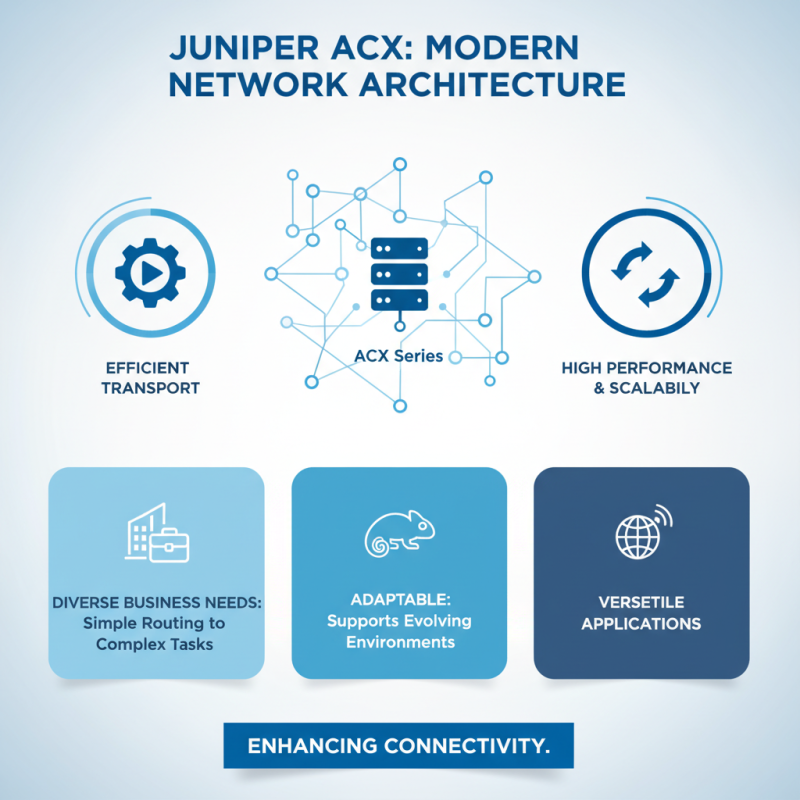
In modern network architecture, the role of efficient transport solutions cannot be overstated. The Juniper ACX series enhances connectivity with high performance and scalability. These devices are designed to support diverse business needs, from simple routing to complex networking tasks. They can adapt to changing environments, making them a suitable choice for various applications.
Tips: Consider future growth when selecting networking devices. Scalability should be a priority for any organization.
ACX platforms are versatile, featuring different models suitable for both small and large organizations. Their ability to integrate seamlessly with existing infrastructure helps optimize operations. Network professionals can achieve reduced latency and improved reliability, which are crucial in today's fast-paced digital world. However, organizations often overlook the importance of regular updates and maintenance, which can lead to performance issues over time.
Tips: Regularly assess your network's performance. Make adjustments based on current traffic and goals.
Investing in the right technology is essential for success. The ACX series offers a strong foundation, but proper configuration and management remain critical. Without proper expertise, leveraging its full potential can be challenging. Emphasizing training for staff on these systems ensures organizations can maximize their investment and remain competitive.
Benefits of Implementing Juniper ACX in Various Industries
The implementation of advanced networking solutions like ACX can significantly boost various industries. For instance, in the telecommunications sector, the demand for high-speed, reliable connections is paramount. A recent report by the International Telecommunication Union noted that global internet traffic is projected to increase by 30% annually. This surge pushes providers to innovate constantly. Organizations that adopt ACX technology can enhance their network capability to handle such growing demands.
In the transportation industry, real-time data accessibility is crucial. Deploying ACX networks can facilitate better traffic management and improve safety. A study by the World Economic Forum highlighted that smart transportation systems could reduce traffic congestion by up to 30%. Implementing ACX solutions enables robust data exchanges, leading to more efficient operations. However, organizations must consider the transition phase. Not all infrastructures will immediately adapt, potentially leading to temporary downtimes or integration challenges.
Healthcare services also benefit tremendously from improved networking. A McKinsey report suggested that telehealth services could save the U.S. healthcare system over $250 billion annually. ACX can play a pivotal role in ensuring seamless data transmission and connectivity. Nonetheless, security concerns remain a significant barrier. Organizations need to prioritize their network security alongside implementation. Balancing innovation and security is no easy task, but it is vital for long-term success.