Top Insights on MVNO Core Network Optimization Strategies?
In the rapidly evolving telecommunications landscape, MVNO Core Network optimization emerges as a crucial focus. Mobile Virtual Network Operators (MVNOs) face unique challenges. Efficiently managing their core networks can ensure a competitive edge. Balancing cost, performance, and customer satisfaction is essential.
MVNO Core Network strategies require careful planning. Operators must enhance their infrastructure while being mindful of budget constraints. Many struggle with outdated technology. This can hinder their growth and competitiveness. Advanced analytics and adaptive solutions can bridge these gaps. They provide real-time insights that drive decision-making.
Optimizing MVNO Core Networks isn’t just about technology. It also involves understanding customer needs. Feedback loops and data-driven approaches promote iterative improvements. Operators should constantly evaluate their strategies. Mistakes can lead to significant setbacks. Embracing a culture of continuous reflection will enhance overall performance. Ultimately, MVNOs must remain agile in this dynamic environment to thrive.

Introduction to MVNO Core Network Optimization
MVNOs, or Mobile Virtual Network Operators, face unique challenges in
optimizing their core networks. Efficient core network strategies can significantly enhance performance and customer satisfaction.
A recent report from the GSMA highlights that optimizing core network functions can lead to
efficiency gains of up to 30%. This is crucial, especially as the
demand for data services continues to rise.
Understanding the architecture of core networks is essential. This includes the management of signaling, data transfer, and user
authentication. A well-optimized core network leads to reduced latency and better service quality. For instance, the use of
virtualized network functions allows MVNOs to adapt and scale resources based on demand. However, many operators still struggle
with legacy systems that impede flexibility.
Tip: Conduct regular assessments of your current network infrastructure.
Identify any bottlenecks and areas that require upgrading.
Additionally, leveraging cloud solutions can create a more dynamic environment. Furthermore, a focus on data analytics can drive
decision-making. However, constant monitoring is often overlooked. Without it, operators risk missing critical performance insights.
Tip: Implement an ongoing performance monitoring system. This can help
identify trends and areas needing attention.
Key Challenges in MVNO Network Management
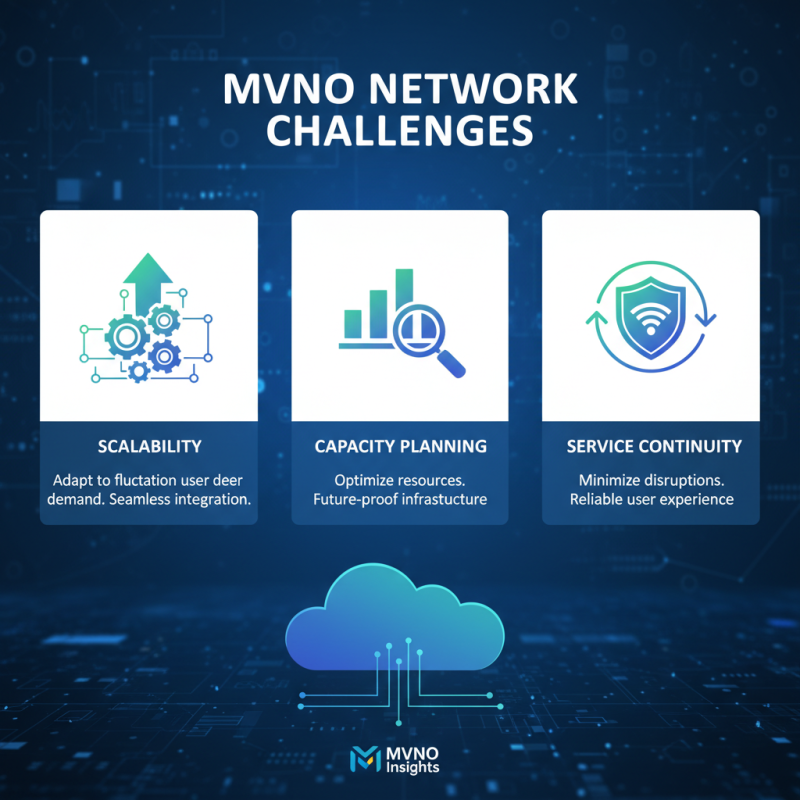
MVNO network management faces a variety of challenges. Scalability is often a primary concern. As user demand fluctuates, the core network must adapt quickly. This means integrating new components without disrupting service. Many MVNOs struggle to strike this balance effectively. Capacity planning becomes crucial, yet it's often overlooked in strategy meetings.
Another significant challenge is network reliability. Downtime can lead to customer dissatisfaction. Ensuring robust backup systems and redundant pathways is essential. However, implementing these can be costly and complex. These obstacles require careful consideration and may lead to performance issues if ignored.
Security also looms large in MVNO management. Cyber threats evolve constantly. Keeping the network secure demands ongoing vigilance. Many MVNOs lack the resources to implement comprehensive security measures. This gap can create vulnerabilities, exposing them to attacks. Continuous assessment of potential risks and proactive strategies are necessary, yet they often fall short in execution.
Strategies for Enhancing MVNO Network Performance
MVNOs, or mobile virtual network operators, are critical players in the telecom industry. As their services expand, optimizing core network performance is essential. A recent report by the GSMA revealed that 75% of MVNOs recognize the necessity of network optimization to compete effectively. This statistic underscores the urgency for innovative strategies.
Enhancing network performance involves several tactics. For example, using advanced analytics can reduce latency and improve user experiences. Real-time data processing helps MVNOs monitor network traffic effectively. According to a survey by Deloitte, 62% of MVNOs that implemented analytics reported increased customer satisfaction. This shows that data isn't just an asset; it's a necessity.
However, challenges persist. Network integration and management remain difficult. Many MVNOs face issues with infrastructure costs and scalability. A report from Analysys Mason highlighted that 48% of MVNOs struggle with high operational expenses, which can hinder network upgrades. Failure to address these concerns can lead to diminished service quality. Keeping up with evolving technology is crucial, yet it can be daunting.
Technological Innovations for MVNO Optimization
The MVNO landscape is changing rapidly. Technological innovations are crucial for optimizing networks. For instance, a recent report from Telecom Analytics found that MVNOs using cloud-based infrastructure reduced operational costs by 20%. This transition allows greater flexibility and scalability. It is essential for MVNOs to stay competitive.
Data analytics tools play a vital role. Insights gained from consumer behavior can lead to improved service offerings. A study from Mobile Network Insights suggested that 65% of MVNOs that implement data-driven strategies see higher customer satisfaction. However, many MVNOs still struggle with data integration. Properly utilizing analytics requires resources and expertise.
Virtual and AI-based solutions also offer opportunities for enhancement. According to a report by Future Networks, virtualized network functions can decrease downtime by up to 30%. Yet, integrating these technologies can be complex. Some MVNOs may find it challenging to adopt these advancements. Constant reflection is necessary to ensure that the deployment of innovations matches business goals and customer expectations.
Measuring Success: Key Performance Indicators for MVNOs
Key Performance Indicators (KPIs) are essential for MVNOs. They help track performance and identify areas for improvement. Common KPIs include
customer acquisition costs, customer churn rates, and average revenue per user. These metrics provide insights into the health of the business.
Monitoring customer churn is critical. High churn rates can signal dissatisfaction. MVNOs may struggle with service quality or pricing strategies. It’s important to analyze why customers leave. Surveys can yield valuable feedback for refinement. A detailed understanding of customer behavior enhances retention efforts.
Maintaining competitive pricing is another KPI focus. Pricing should reflect market trends and consumer preferences. If prices are too high or too low, it can lead to losses. Continuous market analysis is necessary. This allows MVNOs to adapt quickly and strategically. Regular reflection on these KPIs is vital for long-term success.