What is Mvno Core Network and How Does it Work?
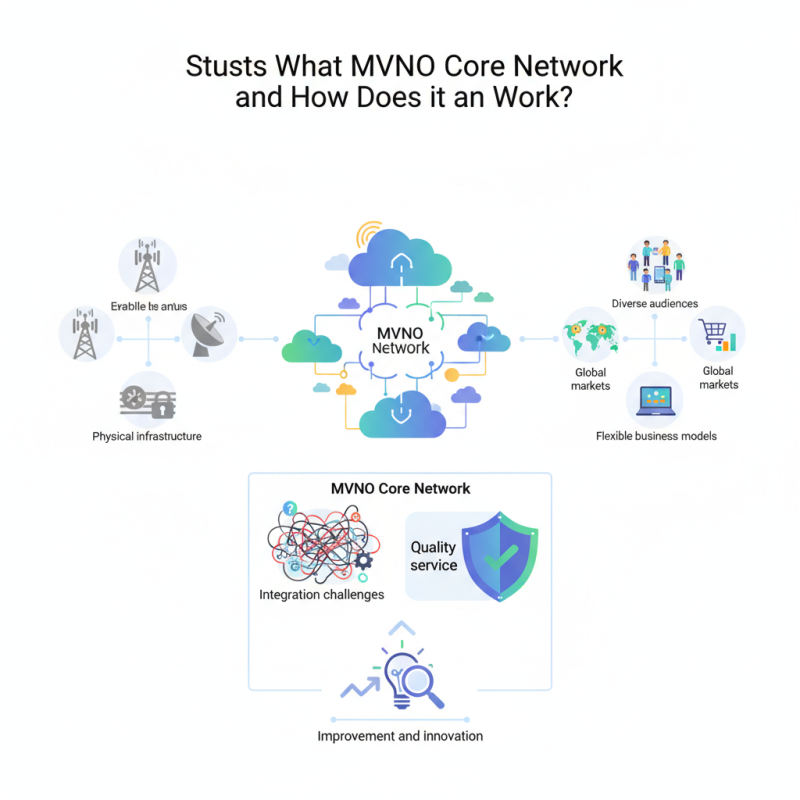
Understanding the Mvno Core Network is essential in today's telecommunications landscape. This network acts as the backbone for Mobile Virtual Network Operators. It allows them to offer services without owning physical infrastructure. The Mvno Core Network enables these operators to provide connectivity efficiently.
The heart of the Mvno Core Network lies in its flexibility. It can adapt to various business models and customer needs. By leveraging this network, operators can reach diverse audiences and markets. However, the complexity of this network can raise challenges. Operators may struggle with integration and ensuring quality service delivery.
In essence, the Mvno Core Network plays a pivotal role in the telecom ecosystem. Its influence on service quality and customer experience cannot be overlooked. Understanding how this network functions will help operators navigate their unique challenges. Yet, there remains room for improvement and innovation in this rapidly evolving field.
What is an MVNO Core Network?
An MVNO core network is a vital component for mobile virtual network operators. It allows them to provide services without owning physical infrastructure. The core network manages essential tasks such as call processing, billing, and data management. This technology enables seamless communication for users, even without traditional mobile infrastructure.
Tips for aspiring MVNOs: Focus on user experience. A good core network can affect service quality. Also, ensure efficient billing systems. Customers dislike billing errors. This can erode trust.
An MVNO core network typically connects to a host network. This connection might face challenges, such as latency or downtime. Addressing these issues is important. Continuous monitoring and maintenance can improve reliability.
Consider this: Is your network as robust as it could be? Reflection on network performance matters.
Key Components of MVNO Core Network Architecture
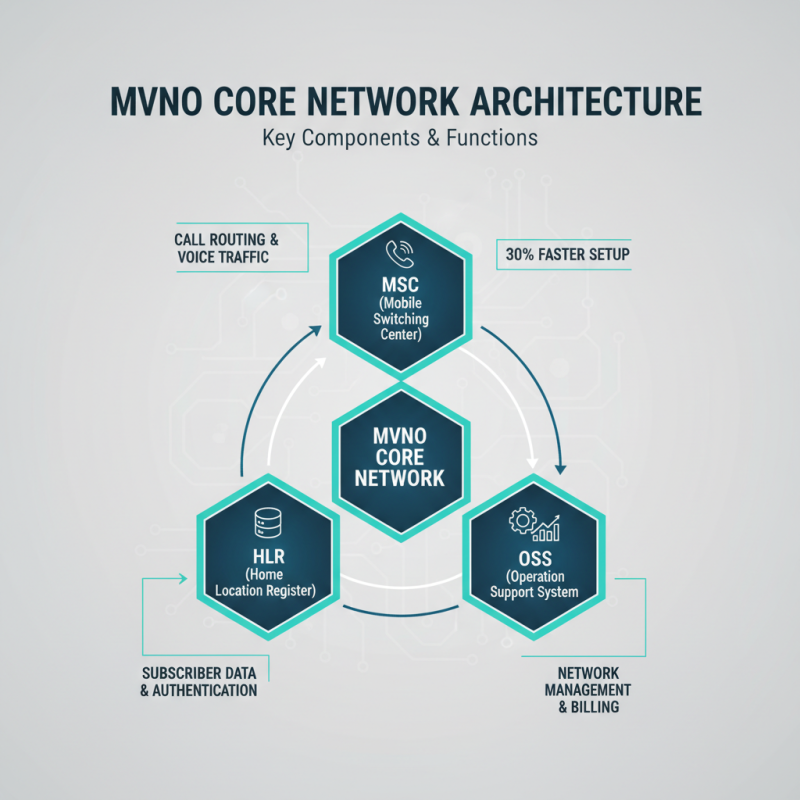
The architecture of an MVNO core network revolves around several key components. These include the Mobile Switching Center (MSC), Home Location Register (HLR), and the Operation Support System (OSS). The MSC is essential for call routing and managing voice traffic. Reports indicate that efficient MSC operations can reduce call setup times by 30%.
Another critical element is the HLR, which stores subscriber information. It plays a vital role in authentication and billing. Research shows that an optimal HLR can improve data processing by up to 25%. This is crucial, given the growing subscriber base; MVNOs can face challenges in scaling their infrastructure effectively.
OSS components handle network management and maintenance. They ensure smooth operations and improve service quality. A recent study found that about 70% of network issues stem from inadequate OSS functions. As MVNOs adapt to dynamic market needs, focusing on these core aspects of the network becomes increasingly important.
How MVNO Core Networks Enable Mobile Services
MVNO core networks play a crucial role in enabling mobile services for users. These networks allow mobile virtual network operators to deliver various communication services without the need for their own physical infrastructure. Instead, they rely on existing mobile networks to provide coverage. This is cost-effective and flexible, making it easier for new players to enter the market.
One major aspect of MVNO core networks is their ability to manage customer data and service provisioning. They handle user authentication, billing, and service management. This infrastructure supports various services, from voice calls to mobile data. Despite the advantages, some aspects are not perfect. For instance, service disruptions can occur if the underlying network experiences issues. Moreover, data security is an ever-present concern, as personal information is processed and stored in these systems.
Furthermore, MVNOs often tailor their offerings to niche markets. This can lead to innovative services that meet specific needs. However, there is a risk of overcomplicating service tiers. Customers may become confused by too many options. Therefore, MVNO core networks must balance complexity and user experience. Simplifying services while maintaining diversity is critical for success in a competitive landscape.
What is Mvno Core Network and How Does it Work? - How MVNO Core Networks Enable Mobile Services
| Dimension |
Description |
Impact on MVNO Operations |
| Core Network Functions |
The key services facilitated by the core network include billing, authentication, and data routing. |
Enables seamless connectivity and customer satisfaction. |
| Virtualization |
Using virtualized infrastructure to run network functions, making it cost-effective and scalable. |
Allows efficient use of resources and quick scalability to meet demand. |
| Interconnectivity |
Connection to various networks including GSM, LTE, and other operator systems for service delivery. |
Ensures widespread service availability and better roaming capabilities. |
| Data Management |
Handling customer data, usage patterns and preferences. |
Enables personalized service offerings and targeted marketing strategies. |
| Security Measures |
Protocols and technologies to ensure data security and privacy. |
Builds customer trust and compliance with regulations. |
Operational Models of MVNO Core Networks
MVNO, or Mobile Virtual Network Operator, relies on various operational models for its core network. These models define how MVNOs deliver services without owning the actual infrastructure. One popular model is the reseller model, where the MVNO partners with a traditional operator to use their network. This setup allows MVNOs to focus on branding and customer acquisition. However, this dependency can limit their control over service quality and customer experience.
Another approach is the service provider model. In this case, the MVNO takes on more significant responsibilities by managing certain aspects of the network. They can offer unique services and tailor packages to attract specific audiences. This model may involve higher operational costs and complexities, requiring technical expertise. Often, MVNOs using this model face challenges in differentiating their offerings in a competitive market.
The hybrid model combines elements of both approaches. It allows MVNOs flexibility in service management while partnering for network access. This could lead to a unique value proposition. Nevertheless, finding the right balance is crucial. MVNOs must continuously evaluate their operational strategies and market positioning to succeed.
MVNO Core Network Operational Models
Challenges and Future Trends in MVNO Core Networks
The MVNO core network faces significant challenges as the telecommunications landscape evolves. One pressing issue is the integration of 5G technology. A report from the Global Mobile Suppliers Association indicates that over 70% of MVNOs plan to adapt to 5G by 2025. However, many lack the resources for this shift. They struggle with infrastructure costs and technology upgrades. Poor partnerships can lead to service gaps too.
Another challenge is data security. With more users relying on mobile services, cyber threats are increasing. A recent study found that 60% of MVNOs have experienced security breaches. Many operators find it hard to implement robust security protocols. This situation raises concerns about customer trust. There is a pressing need for stronger measures to protect user data.
Looking ahead, the MVNO market is expected to grow. According to industry forecasts, subscriber numbers could rise by 15% annually. This growth may require innovative solutions in core networks. Implementing cloud-based technologies can offer scalability and flexibility. However, some MVNOs remain hesitant due to perceived risks. Reflecting on these challenges is crucial for future readiness.