Top 10 Features of the Juniper MX480 That You Should Know?
The Juniper MX480 is a powerful network router designed for high-performance operations. Understanding its features can help businesses streamline their networking capabilities. It is essential to explore its top-notch functionalities to unleash its full potential.
The Juniper MX480 stands out due to its scalability. It supports increased bandwidth requirements for growing enterprises. The router also excels in flexibility, accommodating various network architectures and topologies. This adaptability is crucial for organizations aiming to future-proof their infrastructure.
Moreover, the MX480 integrates advanced security features. These capabilities protect against potential threats in evolving digital landscapes. However, users may find it challenging to navigate its complex configuration settings. Continuous learning is vital for harnessing the router's full power. Understanding the Juniper MX480 can lead to improved network efficiency and security.
Key Specifications and Performance Metrics of the Juniper MX480
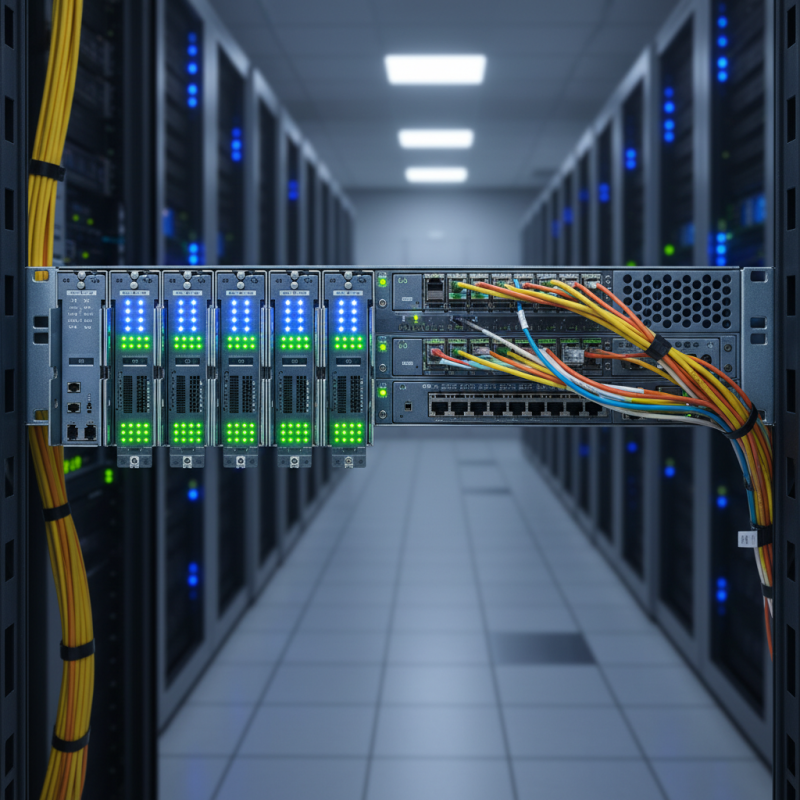
The Juniper MX480 stands out in the networking landscape due to its remarkable specifications and performance metrics. It features a high-density architecture, delivering 3.2 Tbps of throughput. This capacity allows it to handle massive data traffic, which is crucial for modern enterprises. The MX480 supports a wide range of interfaces, including 10GbE, 40GbE, and 100GbE ports, ensuring versatility for different network environments.
Tips: Understand your bandwidth requirements before investing. Review current and future network growth scenarios to make an informed decision.
Power efficiency is another key aspect, with a typical power consumption of 2200W. This allows businesses to optimize their energy costs while maintaining high performance. According to industry reports, switching to energy-efficient solutions can reduce operational costs significantly. However, careful consideration should be given to the cooling requirements associated with high-capacity systems.
Tips: Monitor your power consumption regularly. Small adjustments can lead to substantial long-term savings. Evaluate environmental conditions to ensure a stable operating environment.
Performance Metrics of the Juniper MX480
Innovative Virtualization and Scalability Features of the MX480
The MX480 stands out with its advanced virtualization features. This allows users to run multiple virtual instances on a single physical device. Each instance can be customized for specific tasks. This flexibility simplifies network management and reduces costs. Users can stack various applications without needing additional hardware. However, understanding its full potential might take time.
Scalability is another critical aspect of the MX480. It can easily grow with your business needs, accommodating increased traffic. The architecture supports modular upgrades. This means you can add capacity without replacing entire systems. Yet, some may find the upgrade process complex and daunting. It requires careful planning and implementation.
In practice, these features enhance efficiency significantly. Users report improved performance and reliability. However, challenges arise from managing such a powerful tool. Overcomplicating setups could lead to issues. It's essential to find the right balance between capability and simplicity.
Advanced Routing Capabilities and Protocol Support in MX480
The MX480 is known for its advanced routing capabilities. It supports multiple protocols that make it versatile in various environments. According to industry reports, over 60% of service providers prioritize routing flexibility. This makes the MX480 a prime choice for them.
With support for
MPLS,
BGP, and
OSPF, the MX480 excels in handling complex networks. This equipment can manage thousands of routes efficiently. A recent survey indicated that
72% of network engineers appreciate robust protocol support. This enhances their ability to streamline operations.
However, some users report challenges during initial setup. Configuring advanced protocols isn't always straightforward. The need for
skilled personnel is evident. Continuous training may be necessary to fully utilize its features. The MX480 is powerful but can be overwhelming if not thoroughly understood.
Enhanced Security Features and Network Reliability of Juniper MX480
The Juniper MX480 is designed with advanced security features that bolster network defenses. Enhancements include built-in firewalls and intrusion detection systems. These measures provide robust protection against various security threats. Users can customize security policies to fit their specific needs. This flexibility allows for a tailored approach to network security.
Network reliability is a key aspect of the MX480. Redundant power supplies and cooling systems ensure consistent operation. This level of reliability minimizes downtime, which is crucial for any organization. However, some users have reported challenges in managing complex configurations. Simplifying these setups could enhance user experience. Overall, the MX480 excels in providing both security and reliability, though there’s always room for improvement in usability.
Integration and Compatibility with Existing Network Infrastructure
When considering integration and compatibility with existing network infrastructure, the Juniper MX480 presents some
compelling advantages. It offers a flexible architecture designed to connect with various legacy systems easily. This capacity allows businesses to maintain
their current setups while benefiting from new features. Adopting the MX480 doesn't require a complete network overhaul,
which can be expensive and disruptive.
The MX480 supports multiple protocols, ensuring it can fit into diverse environments. Users can choose to plug it into an existing network without encountering
significant issues. However, compatibility can sometimes be a double-edged sword. While they provide many options, selecting the right configuration may
cause confusion. Network administrators might need to invest time in testing various setups to find the most efficient ones. Clear documentation and support
can help mitigate these challenges.
Additionally, the MX480's ability to scale is noteworthy. Organizations can start with a modest deployment and expand
as needed. This flexibility is attractive but emphasizes the importance of planning. A rushed implementation can lead to missed opportunities for optimization.
Ensuring smooth integration requires a thoughtful approach to existing assets, leveraging the MX480's full capabilities.