



Dell Unveils its First Enterprise-Grade Discrete NPU Mobile Workstation: The Pro Max 16 Plus Unlocks a New Paradigm for Local AI Computing Power
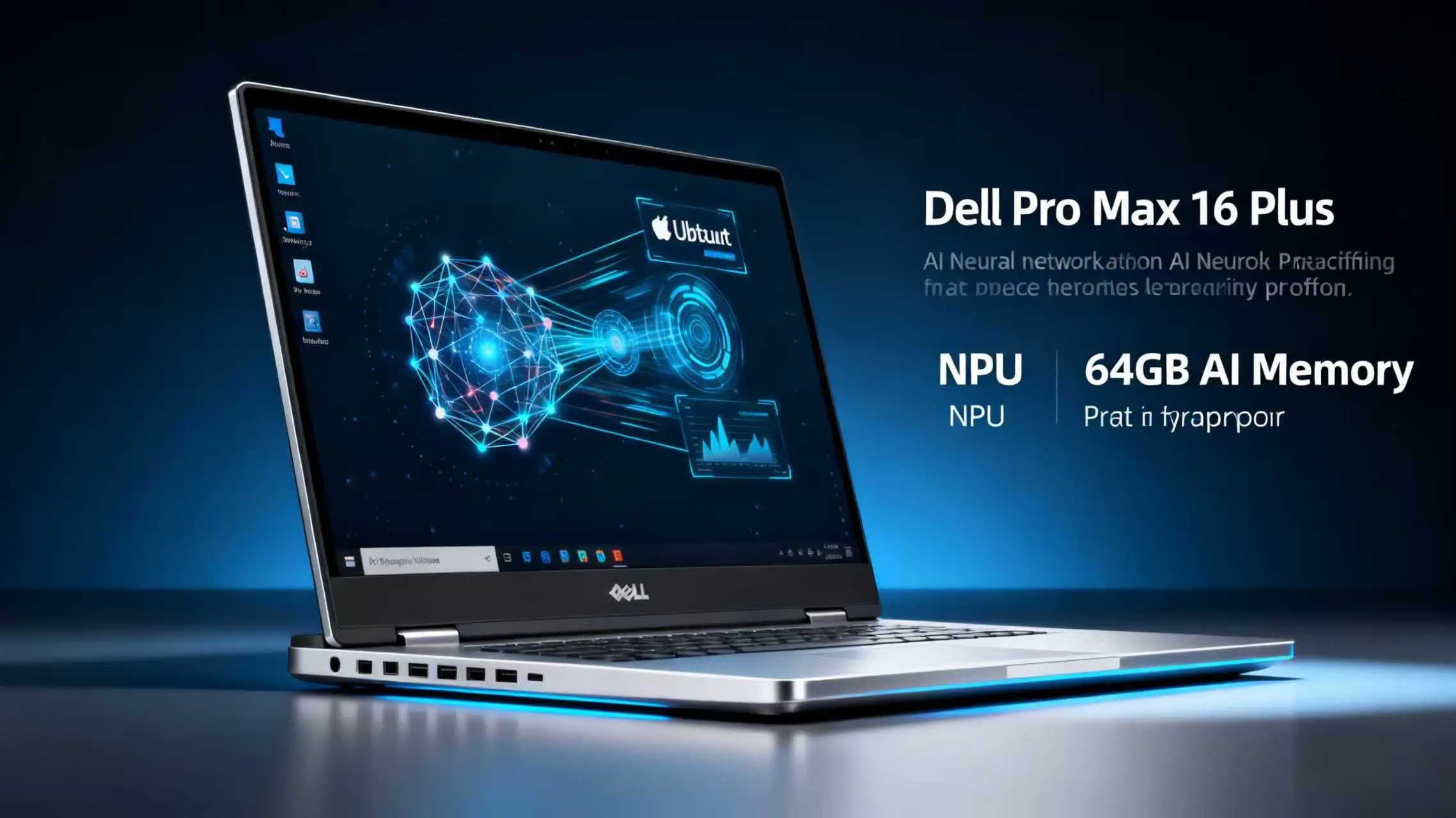
On November 24, 2025, Dell Technologies officially launched the new Pro Max 16 Plus mobile workstation, redefining professional mobile computing standards with its combination of "enterprise-grade discrete NPU + top-tier hardware configuration." As the world's first mobile workstation equipped with the Qualcomm AI 100 PC inference card, this model integrates the ability to run large language models with hundreds of billions of parameters into a portable form factor. Combined with an Intel Core Ultra 9 processor, CAMM2 high-speed memory, and an NVIDIA Blackwell architecture professional graphics card, it achieves multi-tasking breakthroughs in local AI inference, complex 3D modeling, and big data analysis. The first batch of Ubuntu 24.04 LTS Linux versions is now officially on sale, with the Windows 11 version expected to be released in early 2026, marking the official entry of mobile workstations into a new era of "AI-native + data security."
I. Technological Innovation: Discrete NPU Breaks the Bottleneck of Mobile AI Computing Power
In the industry trend of AI computing power extending from the cloud to the edge, the core breakthrough of the Dell Pro Max 16 Plus lies in its integration of the Qualcomm AI 100 PC inference card – this enterprise-grade discrete NPU (Neural Processing Unit) completely changes the current situation where mobile devices rely on integrated AI chips or cloud computing power. This inference card adopts a dual AI-100 NPU architecture, integrating 32 AI cores and 64GB of LPDDR4x dedicated AI memory, supporting FP16 high-precision inference, and can stably run large language models and computer vision models with parameter sizes up to 120 billion.
Compared with the integrated NPU of consumer-grade AI PCs, the advantages of the discrete NPU are comparable to "dedicated graphics cards versus integrated graphics": dedicated AI memory avoids resource contention with system memory, the continuous computing power output of the dual NPU architecture is 3-5 times that of integrated solutions, while the power consumption is only 60% of a GPU with comparable performance, solving the contradiction between high computing power and long battery life in mobile devices. At the press conference, the head of Dell's workstation products emphasized: "The Qualcomm AI 100 inference card gives mobile workstations 'data center-level' AI processing capabilities. Users can complete model training, data anonymization, and real-time inference without relying on the cloud. Sensitive data remains local throughout the process, reducing response latency from seconds to milliseconds."
Notably, the Linux driver for this discrete NPU has been fully integrated into the mainline kernel, which is a key reason why Dell prioritized the release of the Ubuntu 24.04 LTS version. In contrast, the Windows 11 version requires Microsoft to complete driver adaptation and optimization, and is expected to be available to users in Q1 2026. The official recommendation is for initial users to update to the latest firmware to further improve the collaborative efficiency of the NPU and other hardware, reducing power consumption by approximately 15%.
II. Fully Equipped Hardware: Creating the Performance Ceiling for Mobile Workstations
In addition to the core NPU, the Pro Max 16 Plus's hardware configuration is a "no-compromise flagship," with every parameter targeting the extreme demands of professional scenarios:
Processor and Memory: Equipped with up to an Intel Core Ultra 9 285 HX processor, a 16-core, 22-thread design with a turbo frequency of up to 5.8GHz, coupled with 256GB of 7200 MT/s CAMM2 memory, building a super-powerful computing foundation. As a new generation memory standard, CAMM2 (Compression Attached Memory Module 2), compared to traditional SO-DIMM memory, supports dual-channel mode with a single module, achieving data read speeds of up to 117GB/s, latency as low as 55ns, and 30% lower power consumption, providing ample bandwidth for multi-tasking and large model loading.
Professional Graphics Card: Equipped with an NVIDIA RTX Pro 5000 Blackwell professional graphics card, built on the Blackwell architecture, featuring 24GB of GDDR7 video memory (72GB optional in the top-of-the-line version), supporting fifth-generation Tensor Cores and fourth-generation Ray Tracing Cores. Its AI computing power is three times that of the previous generation, allowing for smooth real-time rendering and AI-assisted design functions in professional software such as Blender and AutoCAD. Storage and Interfaces: Storage capacity of up to 12TB, supporting RAID 0/1/5 array configurations, meeting the storage needs of large-capacity data such as 4K video footage and 3D model libraries; interfaces include Thunderbolt 4, USB4, HDMI 2.1, and an SD card reader, supporting dual 4K monitor expansion, balancing high-speed transmission and multi-device connectivity.
The entire machine features a 16-inch four-sided narrow bezel design, with a body thickness of 22mm and a weight of approximately 2.8kg, maintaining the portability of a mobile workstation while delivering full performance. The cooling system has been upgraded to a "five heat pipe + dual fan" Glacier Cooling Pro solution, which intelligently adjusts fan speed and power allocation to ensure continuous and stable output under high load scenarios.
III. Application Scenarios: Reshaping Mobile Office Models Across Multiple Industries
The launch of the Pro Max 16 Plus is rewriting workflows in professional fields such as healthcare, finance, and engineering design, especially in scenarios where data privacy is sensitive or network conditions are limited, demonstrating irreplaceable value:
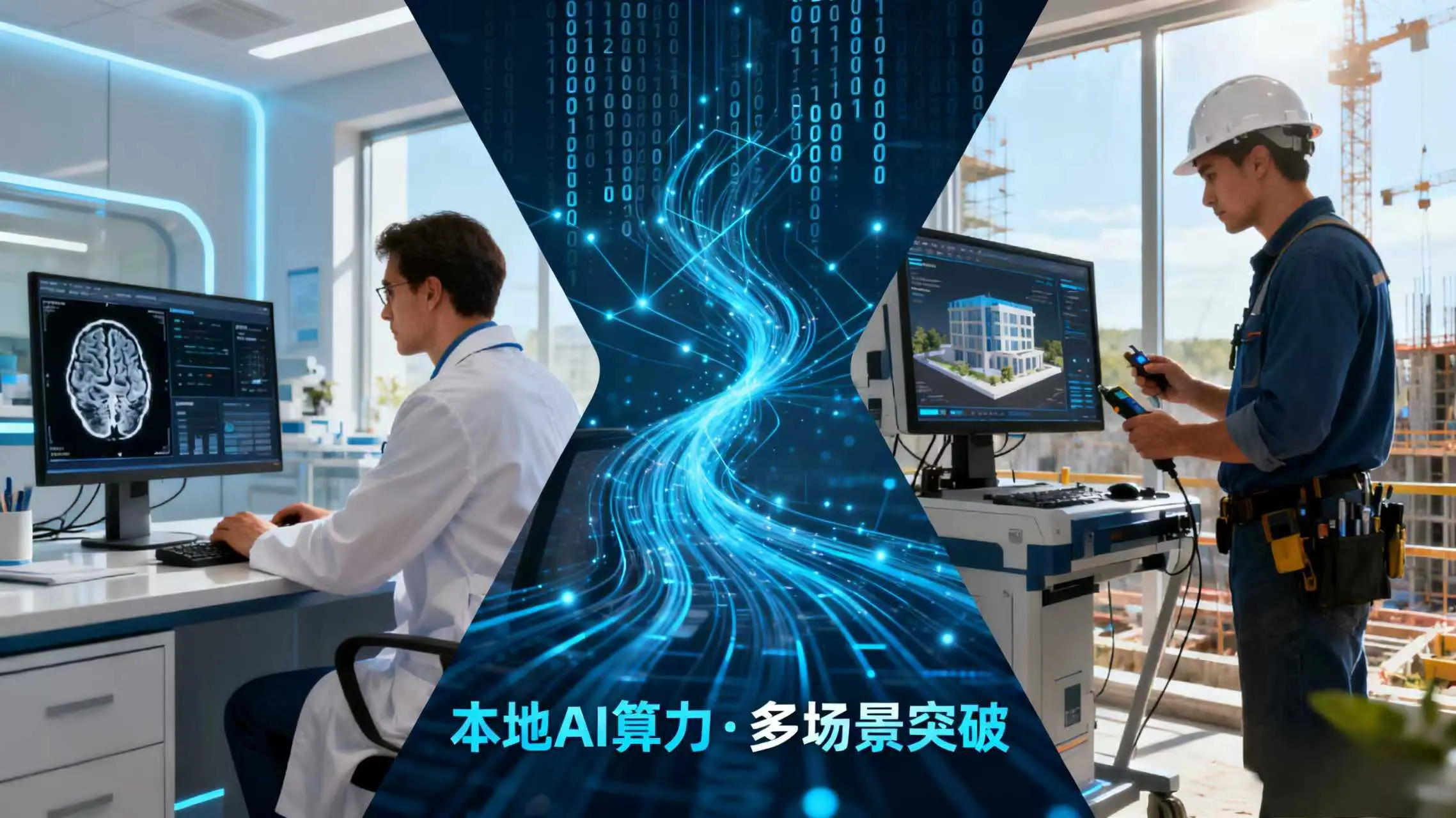
Healthcare: Hospitals in remote areas can use this workstation to perform local AI analysis of medical images, quickly completing tasks such as tumor screening and lesion identification even in offline environments, improving diagnostic efficiency by 40%, and ensuring patient data remains local, fully complying with medical privacy regulations.
Fintech: Banks and securities institutions use it for real-time fraud detection and transaction data analysis. The 64GB dedicated AI memory can cache complete transaction models, with local inference response times of less than 200ms, saving 80% of latency costs compared to cloud-based solutions, while avoiding the risk of sensitive transaction data leakage.
Engineering and R&D: Architectural designers and manufacturing engineers can perform real-time modifications and AI optimization of 3D models on construction sites. The neural rendering technology of the RTX Pro 5000 graphics card can quickly generate photorealistic renderings, while the discrete NPU can simultaneously perform structural mechanics simulations and material performance analysis, improving work efficiency by more than 50%. Research and Education: Universities and research institutions can utilize it for AI model prototype development. The ability to run 120 billion parameter models locally allows researchers to avoid applying for cloud computing quotas, shortening data processing cycles from days to hours, and accelerating the transformation of research results.
The global mobile workstation market report shows that the market size reached US$2.14 billion in 2025 and is expected to increase to US$4.05 billion by 2035, with a compound annual growth rate of 6.6%. The proportion of AI-enabled products will increase from the current 30% to 75% by 2030. Dell's newly released Pro Max 16 Plus is precisely positioned in this growth track, becoming an "AI transformation benchmark" in the professional mobile computing field.
IV. Market Landscape and Listing Information
Currently, the Ubuntu 24.04 LTS version of the Pro Max 16 Plus is available on the Dell official website and through authorized global dealers. The basic configuration (Core Ultra 5 245 HX + 16GB CAMM2 memory + 512GB SSD + RTX Pro 3000 graphics card) starts at US$2779 (approximately RMB 20,000); the high-end version with a Qualcomm AI 100 inference card starts at US$4999 (approximately RMB 36,000), and the fully configured version (Ultra 9 processor + 256GB memory + 12TB storage + RTX Pro 5000 graphics card) is priced as high as US$12999 (approximately RMB 94,000).
In terms of after-sales service, this model offers 3 years of on-site service and accidental damage protection. Enterprise users can purchase additional "Dell Pro Support Plus" service to enjoy 24/7 technical expert support and AI optimization guidance. For industry customers with bulk purchases, Dell also offers customized firmware development and software adaptation services to meet the needs of special fields such as medical and military industries. Industry analysts point out that the release of the Dell Pro Max 16 Plus not only kicked off the competition in the "discrete NPU mobile workstation" market but also propelled the technological restructuring of professional computing devices. In the future, AI computing power will become the core competitiveness of mobile workstations, and local data processing and multi-hardware collaborative optimization will become industry standards. With the release of the Windows version and the adaptation of more third-party software, this product is expected to capture more than 30% of the high-end mobile workstation market share, leading the industry into a new era of "portable computing power + local intelligence."
From cloud dependence to local intelligence, from integrated computing power to discrete NPU, the launch of the Dell Pro Max 16 Plus marks a historic turning point for the mobile workstation industry. This product, which integrates enterprise-level AI inference, top-tier hardware performance, and data security, not only provides professional users with a "data center-level" mobile computing solution but also reshapes the working model and efficiency boundaries in the AI era. Against the backdrop of accelerated digital transformation, the introduction of the Pro Max 16 Plus will inject new innovative momentum into fields such as healthcare, finance, and engineering, driving professional mobile computing to leap from "auxiliary tool" to "core productivity engine."