






Ericsson unveils next-generation 5G equipment: achieving breakthroughs in both energy efficiency and performance, accelerating the rollout of 5G Advanced.
On October 18th, ahead of the 2025 Mobile World Congress (MWC25) in Barcelona, Ericsson, a global leader in telecom equipment, officially launched its next-generation wireless product portfolio, including seven new Massive MIMO devices, interleaved antennas, and the RAN Connect open fronthaul solution. The core highlight of this launch lies in achieving a dual breakthrough in performance enhancement and energy efficiency optimization – flagship products reduce power consumption by 30% while increasing uplink capacity by up to 4 times and reducing implicit carbon footprint by 50%, providing crucial support for global operators moving towards 5G Advanced.
Flagship Hardware Cluster: A Precise Balance of Performance and Energy Efficiency
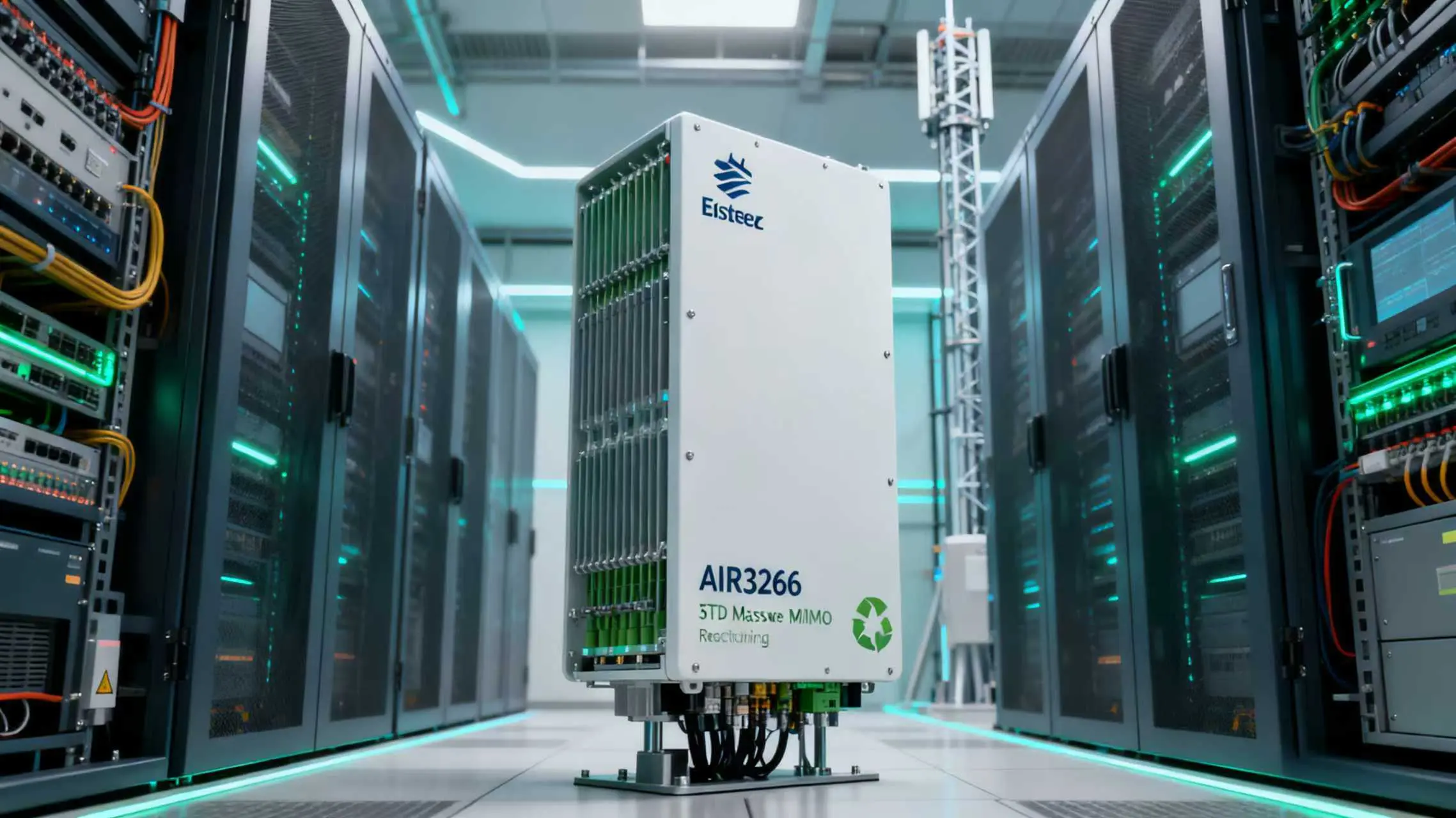
Among the product portfolio launched this time, the ultra-thin broadband TDD Massive MIMO device AIR3266 is the absolute core. This flagship product, equipped with a 32-channel transceiver, boasts a 400W output power and utilizes Ericsson's latest multi-core silicon architecture. This architecture improves spectral efficiency and uplink performance while reducing power consumption by 30% and its implicit carbon footprint by 50%. Mårten Lerner, Head of Network Products at Ericsson, stated at the launch event: "The AIR3266's ultra-lightweight design and energy efficiency redefine industry standards. Its passive cooling technology and the use of recyclable materials perfectly meet operators' sustainability needs." Addressing mid-band deployment requirements, Ericsson also launched the AIR3255 Massive MIMO device. As the first product to adopt the next-generation silicon SoC, it achieves over 25% energy savings and a 20% reduction in carbon footprint through its unique single-board printed circuit board design and small metal filter technology. In the FDD field, the dual-band product AIR3284 (32T/32R) has performed exceptionally well. Compared to traditional 4T/4R equipment, its downlink capacity is doubled and its uplink capacity is increased fourfold, making it a core choice for Telstra's mid-band spectrum deployment. Iskra Nikolova, Telstra's Network and Infrastructure Executive Officer, stated, "AIR3284's FDD Massive MIMO technology solves the uplink bottleneck caused by traffic growth and will perfectly complement our mid-band TDD deployment." The expansion of the ultra-lightweight equipment family is another major highlight. The high-power version of Radio 4461 HP offers a 50% increase in output power while reducing its carbon footprint by 42%; while Radio 8873 offers both standard and high-power versions to suit different deployment scenarios. These devices generally adopt a modular design, reducing weight by more than 24% compared to their predecessors, significantly reducing base station installation difficulty and site leasing costs.
RAN Connect Fronthaul Revolution: Unleashing the Programmable Potential of Networks
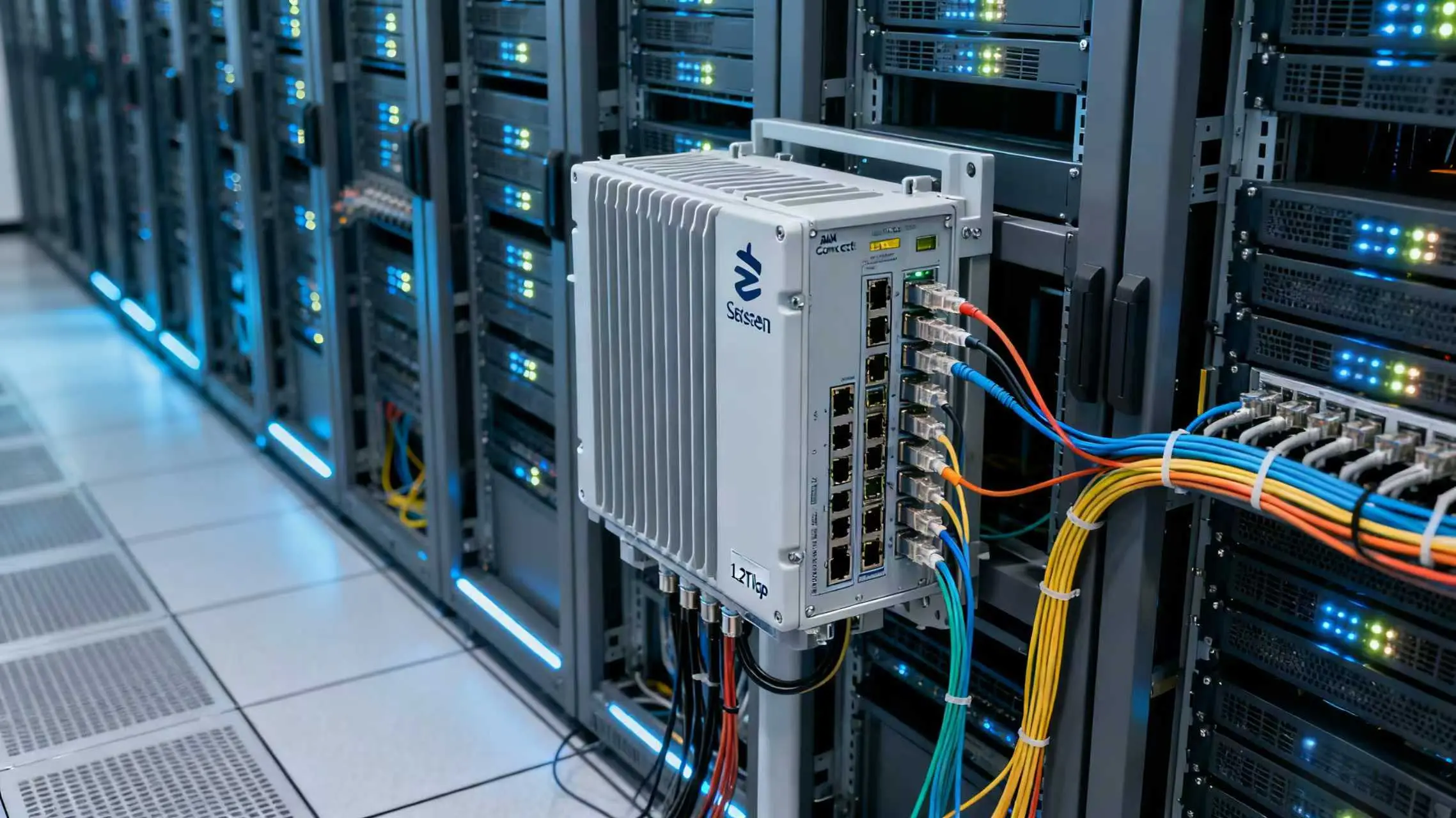
The newly released RAN Connect open fronthaul solution is seen by the industry as a key breakthrough in the next generation of RAN evolution. This series includes three core products: the RAN Connect 6381, a fully outdoor product supporting 600Gbps capacity; the RAN Connect 6682, a large-scale deployment-specific product with throughput up to 1.2Tbps; and the RAN Connect 6681, a 600Gbps indoor product with multiple interface configurations. By breaking the limitations of traditional fronthaul networks, these products enable radio traffic aggregation, fully unleashing the computing potential of the new RAN Compute, and providing underlying support for core 5G Advanced capabilities such as network slicing and carrier aggregation.
“The intermediary links in traditional three-layer network architectures have become a performance bottleneck,” said Ericsson’s Director of Transmission Technology at the technical briefing. “RAN Connect’s disintermediation design reduces inter-host latency by 40%, and its multi-plane redundancy mechanism can instantly switch traffic in the event of a single-plane failure, ensuring industrial-grade reliability.” T-Mobile has already confirmed that it will use RAN Connect 6682 to build its 5G Advanced trial network, providing a network foundation for low-latency applications such as XR.
Sustainable design permeates the entire chain: a green revolution from hardware to operations.
Sustainable development principles are integrated into all the products released this time. Regarding antennas, the new interleaved antennas 8001/8002 integrate multiple frequency bands into a single antenna. Combined with the Antenna 4206’s 100% thermoplastic radome and lightweight structure, this achieves a 49% reduction in carbon footprint and a 24% reduction in weight, with all materials being recyclable. The D620 power system innovatively introduces a "zero-watt sleep" function, completely eliminating energy consumption when the equipment is idle, saving over $3,000 per base station per year compared to traditional solutions.
On the software side, the Automated Energy Saver (AES) function is a highlight. This function can autonomously adjust wireless resources according to the operator's preset intentions, achieving dynamic energy saving while ensuring user experience. Mark Düsener, head of mobile networks at Swisscom, commented: "The automated energy saving function allows us to reduce operational complexity while monitoring user experience, with an average 18% reduction in base station energy consumption in our tests." According to Ericsson's calculations, if global operators widely adopt the energy-saving solutions released this time, it could reduce carbon emissions equivalent to 20 million cars by 2030.
Accelerated Manufacturer Collaboration: 130 Programmable Products to be Delivered This Year
At the launch event, Ericsson clearly planned to deliver 130 open-programmable wireless products by 2025, accounting for more than two-thirds of its total annual deliveries. This plan has garnered responses from several international operators: T-Mobile will deploy the AIR3266 and RAN Connect solutions in its San Diego 5G SA commercial network for XR application trials, validating low-latency, high-throughput network slicing capabilities; Swisscom plans to combine automated energy savers with private network solutions to provide low-power 5G MPN services for manufacturing enterprises; SoftBank will adopt uplink-aware multi-layer network collaboration software to optimize uplink transmission performance for AR/VR applications.
Rémy Pascal, Senior Research Manager for Mobile Infrastructure at Omdia, analyzed: "Ericsson's newly released product portfolio offers synergistic advantages in performance, sustainability, and openness. Its collaboration with AT&T on Open RAN and T-Mobile's 5G Advanced trials further solidify its industry leadership." Ericsson predicts that by the end of 2030, 5G will carry 80% of mobile data traffic, and this newly released product portfolio will help operators maintain stable TCO (Total Cost of Ownership) during periods of surging traffic.
Industry Impact: Ushering in the First Year of Large-Scale 5G Advanced Deployment
This release marks a new stage in 5G development, emphasizing both performance and energy efficiency. From a technological evolution perspective, Ericsson's silicon core technology's multi-core architecture and programmability provide upgrade space for subsequent 5.5G and even 6G technologies. From an application perspective, the advancement of XR trials and the maturity of private network solutions will accelerate the commercialization of scenarios such as the Industrial Internet and immersive experiences.
In an interview, Ericsson's Chief Technology Officer, Börje Ekholm, emphasized: "The core value of 5G Advanced lies in the comprehensive improvement of connectivity efficiency. Our new generation of products, through hardware integration and software optimization, achieves a breakthrough of 'no performance reduction and 30% energy consumption reduction,' which is a key solution for operators to address traffic growth and carbon neutrality goals." Industry experts predict that with the large-scale deployment of these devices, global 5G Advanced network coverage will exceed 30% by the end of 2025, injecting new momentum into the development of the digital economy.