


Lenovo Unveils AI Strategy at 2025 Cloud Expo, Sets New Records
A Technological Game-Changer: 1.035 PUE Liquid Cooling Technology, 96.6% Energy Efficiency for Computing Power
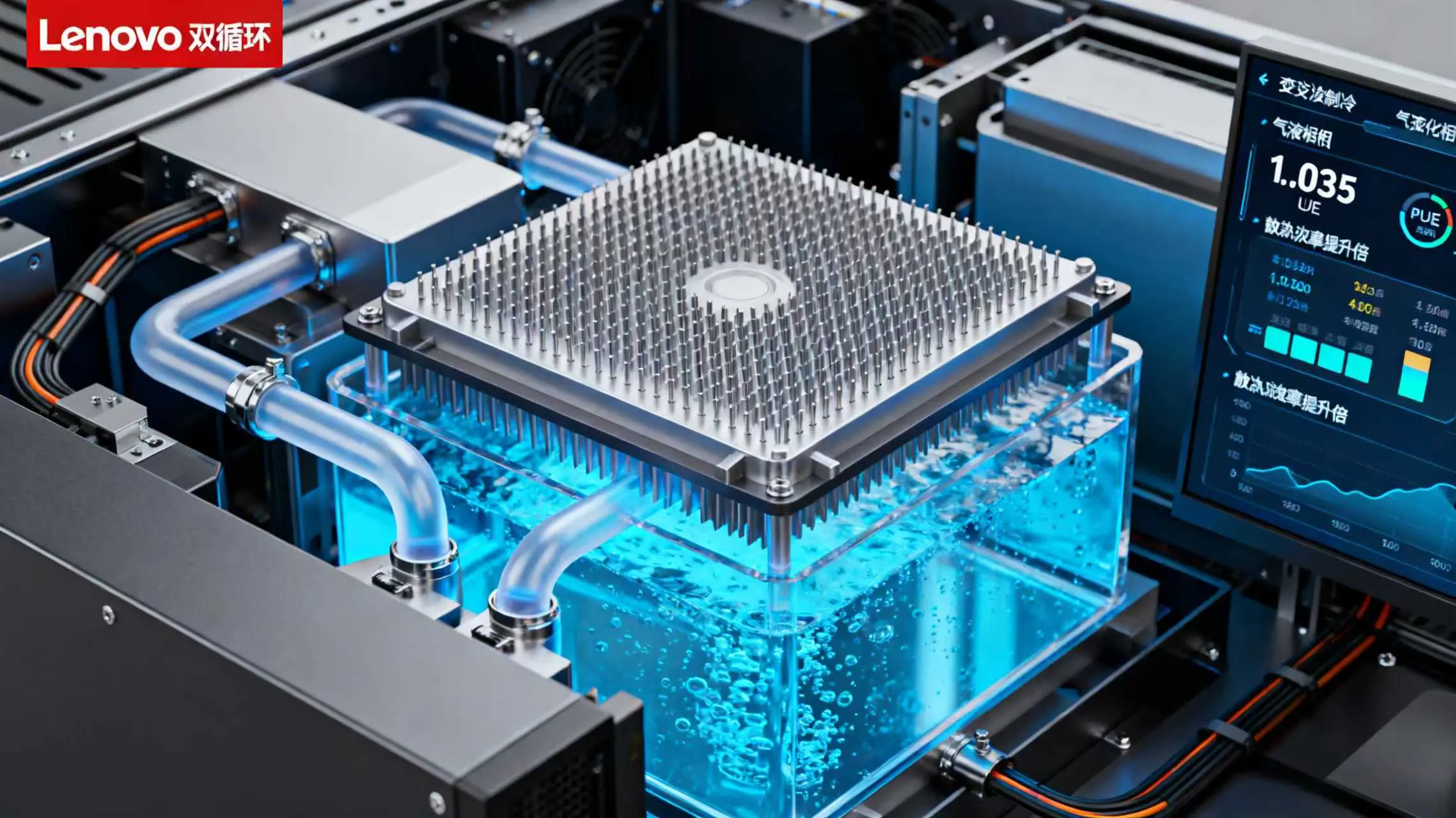
At the heart of Lenovo's exhibit at the Cloud Expo, a server cluster immersed in a special cooling fluid drew a constant crowd—this is Lenovo's latest "dual-loop" phase-change immersion cooling system. Its actual PUE value of 1.035 pushes data center energy efficiency to the global top level.
"Traditional data centers consume 0.48 kWh of cooling energy for every 1 kWh of computing power. Our technology reduces this waste to just 0.035 kWh," explained Zhang Yu, Director of Technology at Lenovo Data Center Group, during the live demonstration. The system's revolutionary design lies in three innovations: micro-scale dimples on the heat sink surface allow the cooling fluid to instantly vaporize and absorb heat; a pin fin array increases the heat dissipation area by 60%; and the industry-first dual-phase circulation architecture provides separate channels for liquid and gas phases, completely solving the efficiency degradation caused by "bubble blockage" in traditional immersion cooling.
Data from the demonstration shows that the system can easily handle high-power chips up to 1000W. In a real-world deployment at Suihonghuachuang's green AI computing center, it supported a thousand-GPU cluster running continuously for 30 days without failure, with cooling efficiency 4 times higher than air-cooled systems. Even more forward-thinking, the system's integrated thermoelectric generator module recovers waste heat and converts it into electricity, powering auxiliary equipment like lighting and monitoring, pushing the PUE value close to the theoretical limit of "less than 1."
This technological breakthrough addresses a key pain point in AI computing. As large model training scales from thousands of GPUs to exabyte levels, cooling costs account for 35% of total data center investment. "After adopting Lenovo's liquid cooling solution, our annual electricity bill decreased by 42 million yuan, equivalent to saving 12,000 tons of standard coal annually," revealed the project manager at Suihonghuachuang. The center's model training efficiency improved by 28%, and the DeepSeek R1 model throughput broke 12,000 tokens/s, setting an industry record. Hardware Portfolio: Seamless Computing Power Coverage from Edge to Cloud
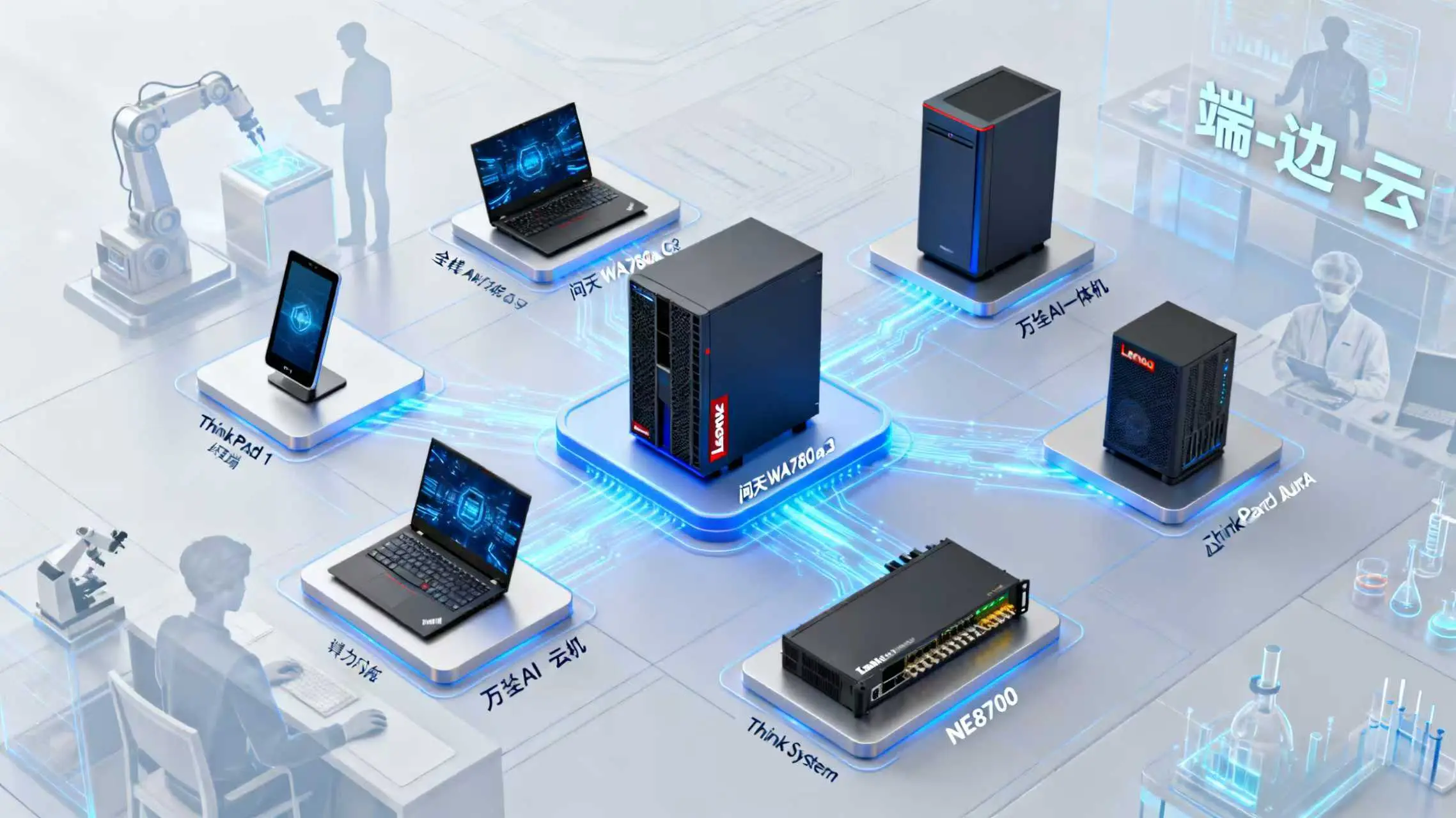
Based on its "Hybrid AI" strategy, Lenovo's showcased hardware products offer comprehensive coverage across the "edge-cloud" spectrum, from personal computing devices to massive AI supercomputing clusters, precisely meeting the computing power needs of various scenarios.
The Tianyi WA7880a G3 server, a key component of the AI computing infrastructure, is a true "computing powerhouse." Designed specifically for generative AI training, this flagship model supports eight 4th generation Xeon processors and eight H100 GPUs, with a memory bandwidth of up to 2TB/s. Combined with NVLink 4.0 interconnect technology, it achieves sub-1 microsecond latency for GPU-to-GPU data transfer. In tests conducted at Peking University's major scientific infrastructure computing platform, this server reduced the processing time for a genome sequencing task from 72 hours to 11 hours, and increased GPU resource utilization from 70% to 90%.
The WanQuan AI All-in-One device for edge computing emphasizes "plug-and-play" simplicity. This standardized device integrates computing modules, algorithm libraries, and a management platform, supporting flexible scaling from 16 to 128 GPUs. Its built-in AI compiler optimizer automatically adapts to mainstream large model frameworks. Addressing common deployment challenges for SMEs, its intuitive management interface allows non-technical users to load models and optimize performance within 30 minutes. It has already been deployed on a large scale in applications such as intelligent manufacturing quality inspection and medical image analysis.
Innovations in the user interface layer are equally impressive. The ThinkPad X1 Carbon Aura features the TianXi Personal Super AI, enabling seamless cross-device collaboration—from initiating tasks on a PC to continuing on a mobile device and outputting on a tablet. For enterprise users, the LeXi Super AI integrates CRM and ERP data, providing real-time decision-making recommendations. During a live demonstration, users observed that in contract review scenarios, the AI automatically identifies risk clauses and generates suggested revisions, improving efficiency by 10 times compared to manual methods.
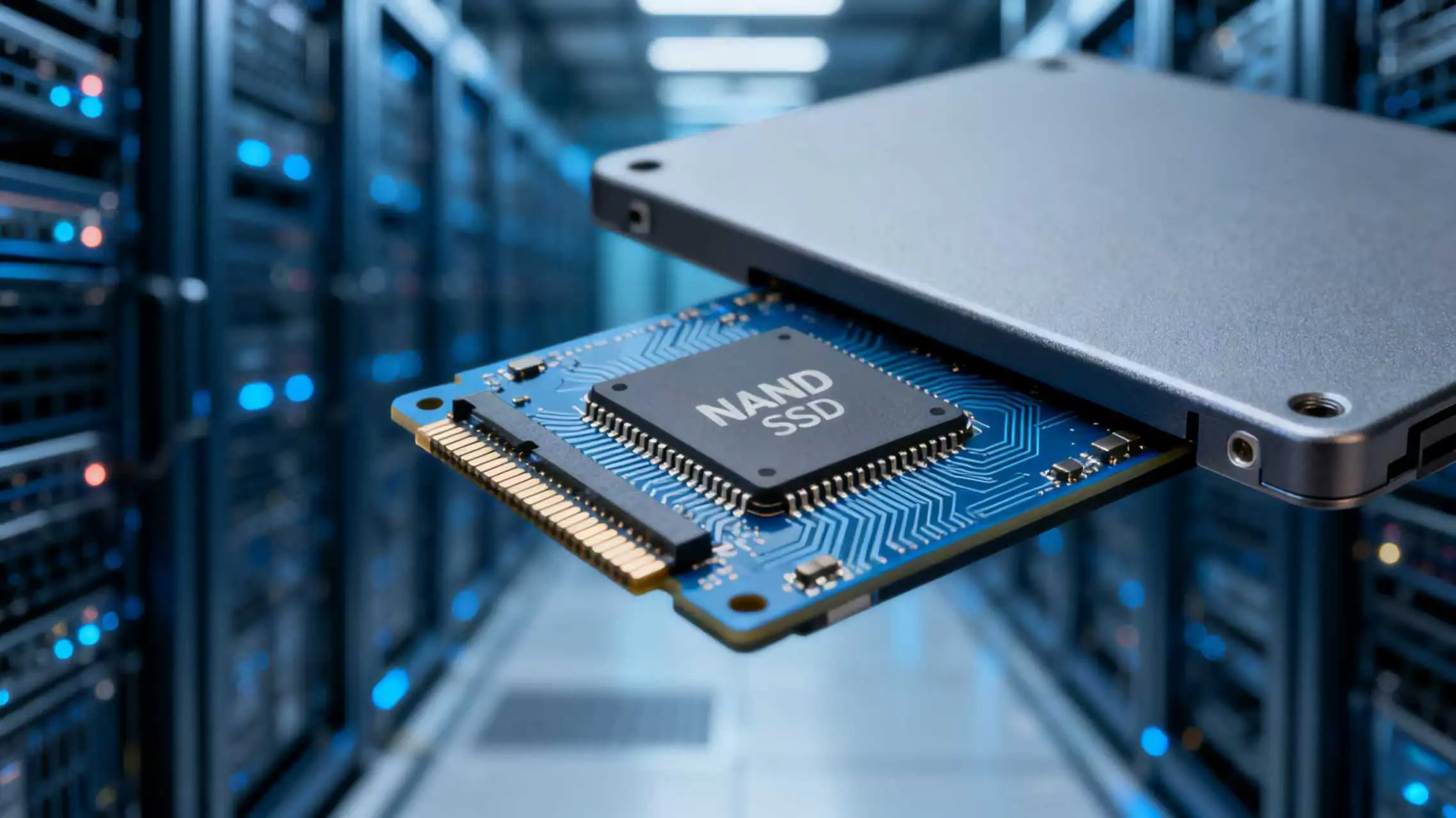
New products in the general computing sector are also highly competitive. The ThinkSystem DG Series all-flash storage system offers an effective capacity of 1.2PB and an IOPS performance exceeding 20 million, ensuring high-speed access to massive training datasets. The Tianyi NE8770-64QC switch supports 400G ultra-high-speed transmission, and its RoCE architecture achieves sub-millisecond latency, meeting the low-latency requirements of financial trading, autonomous driving, and other applications.
Solution Deployment: An AI Productivity Revolution Across Industries
Beyond the technological breakthroughs, Lenovo's industry solutions demonstrate its core proposition of "AI as a driver of innovation and productivity." Several benchmark cases have established replicable transformation paths.
In manufacturing, Lenovo's intelligent supply chain solution for an ICT group achieved disruptive transformation. By integrating multi-level planning processes and using AI-driven decision-making, the system reduced the production planning cycle from 14 days to 7 days, increased inventory turnover by 20%, and improved plan execution rate to over 90%. "Previously, handling unexpected orders required five departments to coordinate for three days; now, the AI system automatically generates three solutions and predicts risks," said the group's supply chain head. This success placed the company at number eight on Gartner's Top 25 Global Supply Chain list.
The application in scientific research is equally impressive. Shanghai Jiao Tong University's "Siyuan 1" supercomputing center, built with Lenovo ThinkSystem Servers and DSS distributed storage, uses Tianyi's "HaiShen" chilled water cooling technology to maintain a PUE below 1.1, supporting cutting-edge research in fluid dynamics simulation and quantum chemistry. "What used to take six months to simulate engine turbulence now takes only two weeks," said the director of SJTU's High-Performance Computing Center. The platform has incubated three national-level research achievements.
In government and financial sectors, Lenovo's hybrid AI architecture demonstrates unique advantages. A provincial government cloud platform adopts a "large model in the cloud + edge inference nodes" deployment model. Using an AI-integrated device, it achieves real-time ID verification in government service centers with a response time of less than 200 milliseconds, while ensuring that sensitive data remains local. A commercial bank leverages Lenovo's intelligent cloud platform to build a risk control model, increasing the accuracy of fraud detection to 98.7% and reducing annual losses by 180 million yuan. Deepening ecosystem collaboration makes solutions more dynamic. Lenovo's AI assistant has integrated with Alibaba Cloud's Qwen3 large language model, achieving significant improvements in language understanding and multi-round reasoning, now serving over 20,000 SMEs. "We don't create isolated technology silos; we make AI capabilities accessible through open collaboration," emphasized Wang Chuan-dong, Vice President of Lenovo Group. Lenovo has partnered with over 200 ecosystem partners to develop AI solutions, covering 15 key industries.
Industry Transformation: Hybrid AI Reconfigures Computing Power Competition
Lenovo's full-stack AI strategy is subtly reshaping the global computing power industry. Its "hybrid AI" strategy addresses the core challenge of AI deployment—meeting the centralized computing power needs of large model training while solving the pain points of local deployment for industry applications.
This strategic advantage translates into market competitiveness. IDC data shows that Lenovo's AI server shipments grew 56% year-on-year in Q2 2025, with a 32% win rate in domestic intelligent computing center projects, surpassing Dell and HPE. "Lenovo's strength lies in its dual expertise in technology and application scenarios. They can build top-tier servers and understand manufacturing production logic," noted industry analyst Li Meng. This capability is difficult for pure hardware vendors and cloud service providers to replicate.
For the industry, Lenovo's practice offers important insights: AI infrastructure competition has evolved from comparing hardware parameters to a comprehensive battle of "technology architecture + scenario adaptation + ecosystem collaboration." Its liquid cooling technology solves the energy efficiency bottleneck of large-scale computing, full-stack hardware meets diverse needs, and industry solutions transform AI from a "laboratory technology" to a "production tool." Conclusion: The Computing Power Revolution Enters a New Phase; Implementation Capability Will Determine Success
Lenovo's full-stack AI solution unveiled at the 2025 Cloud Computing Summit signifies that the global competition in computing power has moved beyond a mere "arms race" and entered a new, more complex phase. The impressive figures—a PUE of 1.035, a model throughput of 12,000 tokens/s, and a 50% reduction in project cycle time—demonstrate the deep integration of technological innovation and industry needs.
Lenovo's strategic choices reveal the future direction: hybrid AI will become the mainstream approach, energy-efficient technologies like liquid cooling will be core competencies, and application-specific solutions are key to successful implementation. For businesses across all industries, this means that AI transformation no longer requires starting from scratch. From end devices to data centers, from cooling solutions to supply chain optimization, ready-to-use, mature solutions are available.
With the "East-West Data Center Coordination" project progressing and the era of ubiquitous AI approaching, computing power will become a fundamental resource, like electricity or water. Lenovo's demonstrated full-stack capabilities not only solidify its industry leadership but also build a "computing power highway" for the entire industry. When every unit of energy can be more efficiently converted into computing power, and when every business can easily access suitable AI tools, the true explosion of innovative productivity will finally arrive.