



NVIDIA Breaks Through on Two Fronts: NVQLink Unlocks a New Era of Quantum Computing, 1 Billion Dollar Bet on 6G to Build an AI Ecosystem Empire
In late autumn 2025, tech giant NVIDIA unveiled a series of significant moves, shaking up the industry in quantum computing and next-generation communications. On November 11th, NVIDIA officially released NVQLink, an open quantum-GPU interconnect architecture that breaks down the barriers to collaboration between quantum processors and classical supercomputers with ultra-low latency of 4 microseconds, marking a crucial step towards the practical application of quantum computing. Prior to this, at the GTC Global Technology Conference in Washington in October, NVIDIA announced a $1 billion strategic investment in Nokia, simultaneously launched the Bluefield-4 processor for AI factories, and initiated a plan to collaborate with the U.S. Department of Energy to build the world's top AI supercomputer. Behind this series of intensive actions is NVIDIA's grand ecosystem strategy, centered on accelerated computing and connecting quantum technology, 6G communications, and industrial intelligence, which is reshaping the competitive landscape of the global technology industry.
The Rosetta Stone of Quantum Computing: NVQLink Solves the Collaboration Dilemma
At a technology launch event in Washington, D.C., NVIDIA CEO Jensen Huang likened NVQLink to the "Rosetta Stone of the quantum age," stating that this open architecture will bridge the long-standing collaboration gap between quantum and classical computing. For a long time, while quantum computing has the potential to break through the bottleneck of classical computing power, it has been hampered by the inherent defects of qubits—qubits, the core of quantum computing, are highly susceptible to noise interference and decoherence, with a settling time of only tens of microseconds. If computational data cannot be processed in time, it will be permanently lost. Simultaneously, the lack of standardized interfaces for quantum processors (QPUs) across different technologies leads to low collaboration efficiency with classical computing devices, severely restricting the large-scale application of quantum computing.
NVQLink precisely fills this gap. As a "quantum highway" connecting quantum processors and GPU supercomputers, this architecture is not a simple transmission cable, but a comprehensive solution integrating high-speed channels, universal translators, and precise timers. Its core breakthrough lies in its ultra-low latency transmission capability at the 4-microsecond level, a speed 14 times faster than traditional PCIe interfaces. This ensures that the "short-lived data" generated by qubits is transmitted and processed before decoherence. More importantly, NVQLink boasts strong compatibility, achieving full support for 17 quantum hardware vendors (including industry leaders such as IonQ and Quantumuum) and 5 controller developers. It enables seamless collaboration between different devices without customized adaptations, establishing a unified interconnect standard for the quantum computing industry.
Quantum error correction is the concentrated embodiment of NVQLink's technological value. Quantum error correction is a core prerequisite for the practical application of quantum computing, and NVQLink's real-time closed-loop error correction system reduces the qubit error rate from one in ten thousand to one in a billion—a threshold for practical application. Its workflow is highly efficient and seamless: the quantum processor monitors quantum state anomalies in real time during computation, and the generated error data is instantly transmitted to the Blackwell GPU via NVQLink; the GPU, with its powerful parallel computing capabilities, quickly analyzes the error type and location, generates precise error correction instructions, and sends them back to the quantum processor; the entire error correction process takes no more than 4 microseconds, completing the correction just before the quantum state decohers. This technological breakthrough expands tasks that could previously only handle hundreds of qubits to tens of thousands or even millions of qubits, providing a feasible computing solution for cutting-edge fields such as molecular simulation, cryptography, and nuclear fusion research.
The rapid advancement of ecosystem collaborations confirms NVQLink's industry recognition. Currently, NVIDIA has partnered with 17 quantum computing companies and 9 top research laboratories, including Argonne National Laboratory and Los Alamos National Laboratory, both under the U.S. Department of Energy, which have already connected to the NVQLink network. Argonne National Laboratory's Solstice supercomputer, equipped with 100,000 Blackwell GPUs, collaborates with quantum processors via NVQLink to complete molecular interaction simulations in minutes that would take traditional computers months, providing powerful support for new materials research and drug innovation. At the launch event, Jensen Huang emphasized, "NVQLink's open nature will lower the industry's innovation threshold. Existing DGX Quantum users can seamlessly migrate to the new architecture through software upgrades, accelerating the process of quantum computing moving from the laboratory to industrial applications." Beyond breakthroughs in quantum computing, Nvidia's foray into next-generation communications is equally noteworthy. On October 28th, Nokia officially announced that Nvidia would subscribe to 166 million new shares at $6.01 per share through a private placement, totaling $1 billion. Upon completion of the transaction, Nvidia will hold a 2.9% stake in Nokia. This cross-industry collaboration has generated a strong response in the capital markets. On the day the news was announced, Nokia's stock price surged by over 26% intraday, while Nvidia's stock price also rose by 5%, reflecting the market's high expectations for the synergistic effects between the two companies.
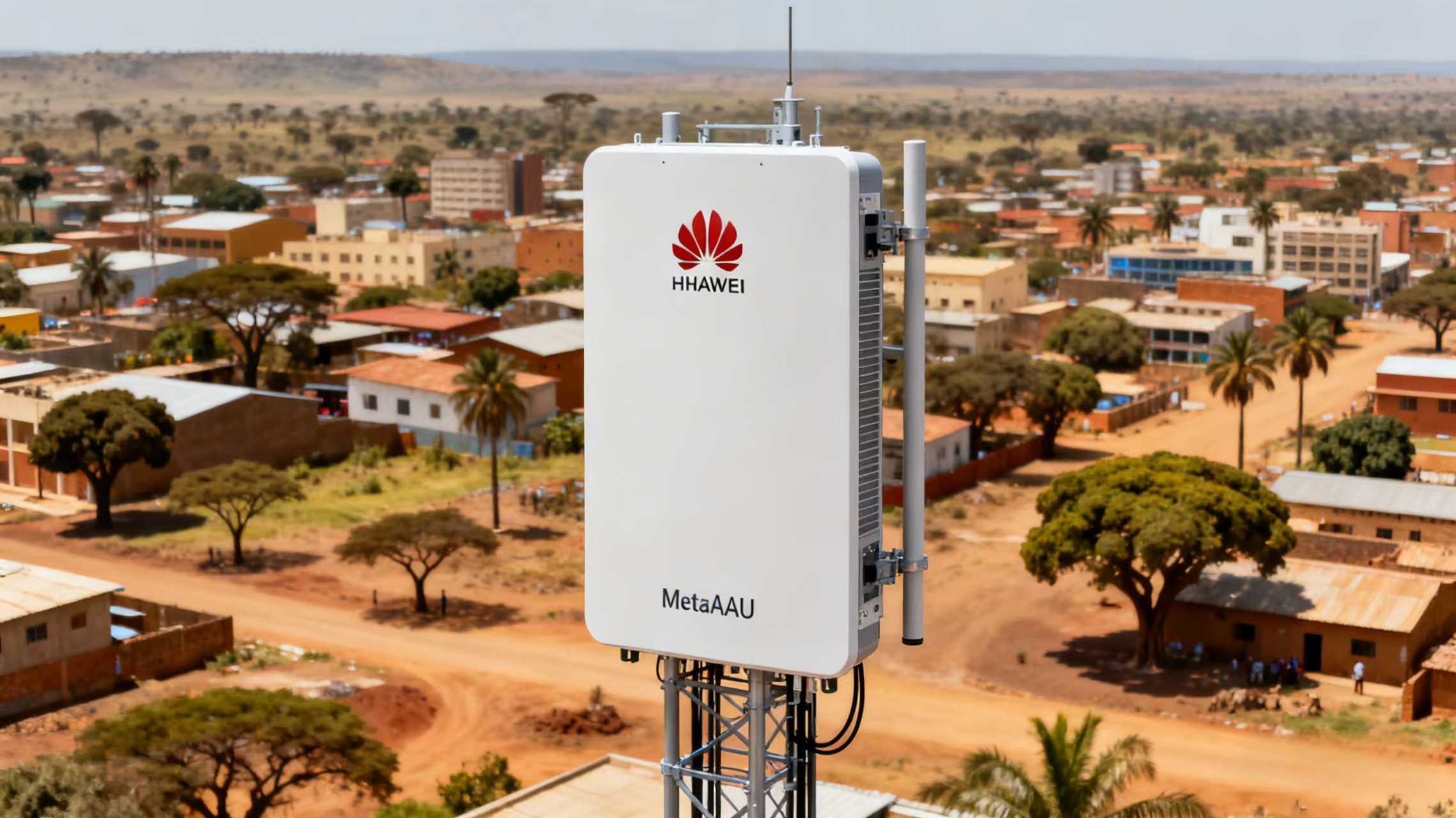
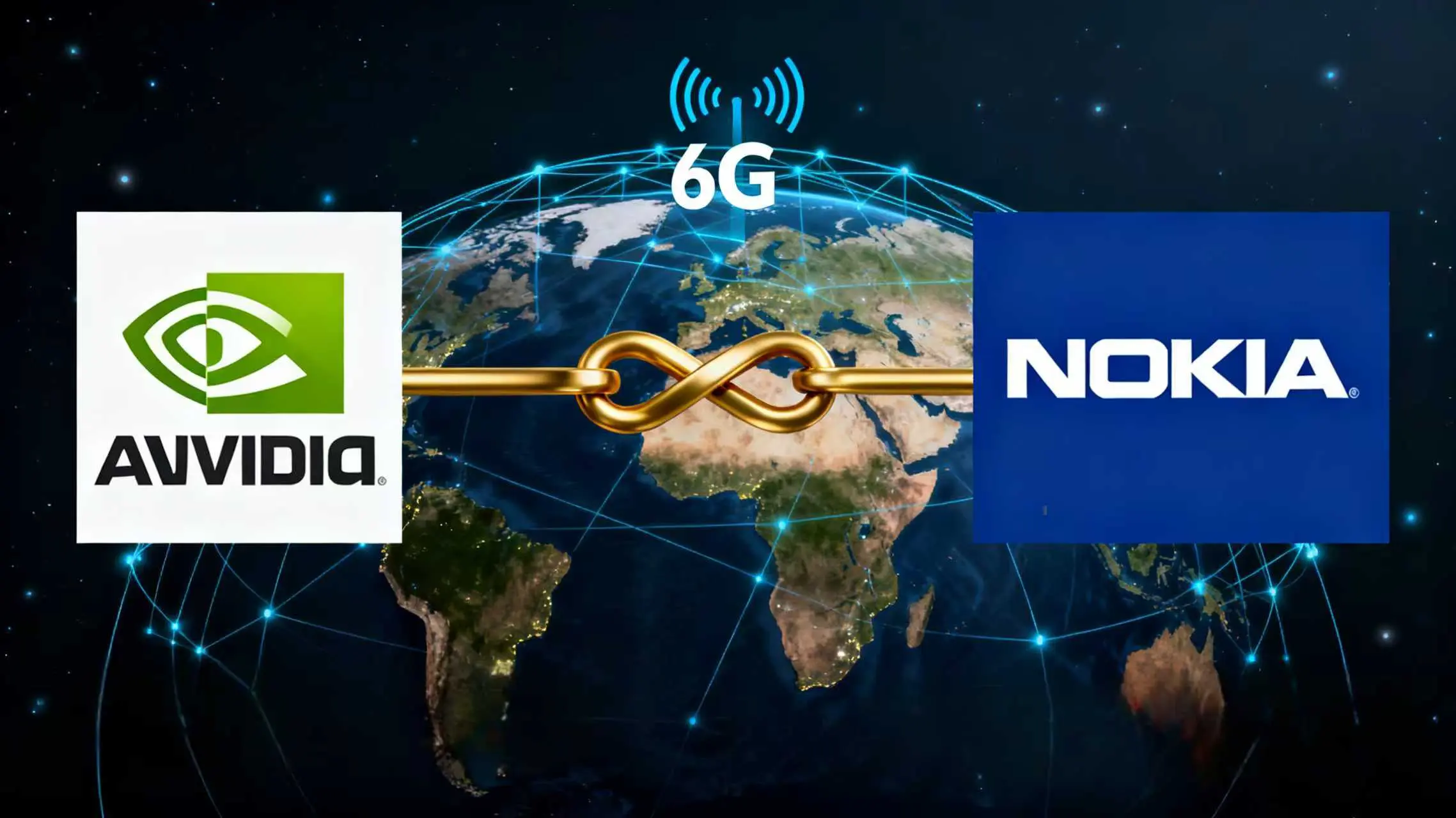
The core objective of this collaboration is to jointly advance the research and deployment of an AI-native 6G network platform. In his GTC keynote speech, Jensen Huang pointed out that millions of communication base stations worldwide constitute the most extensive physical network infrastructure, and the collaboration between Nvidia and Nokia will enable "building cloud computing systems on wireless telecommunication networks," allowing AI computing power to directly reach edge scenarios that data centers cannot cover. According to the collaboration plan, Nokia will optimize its 5G and 6G software to run efficiently on Nvidia chips; Nvidia will explore integrating Nokia's data center technology into AI infrastructure, forming a closed-loop technology system that combines software and hardware.
To support this strategy, Nvidia simultaneously launched the Arc Aerial RAN Computer, an accelerated computing platform designed specifically for 6G. This product is not only fully compatible with Nokia's existing AirScale base station architecture, but also deeply integrates AI technology into the operation and management of the Radio Access Network (RAN). Through real-time data analysis, it optimizes network resource allocation and reduces signal interference, achieving a qualitative leap in communication efficiency. Jensen Huang emphasized, "This is the first time we have been able to use AI technology to make wireless communication more efficient. Both parties will use 6G and AI to upgrade millions of base stations worldwide, ushering in a new era of convergence between communication and computing." Currently, this collaboration has entered a substantial implementation phase. NVIDIA, Nokia, and US telecom operator T-Mobile U.S. have reached a tripartite agreement to launch field testing of AI-RAN technology in 2026, focusing on verifying the performance of 6G networks in low-latency, wide-connectivity, and high-bandwidth scenarios. Industry analysis indicates that with the deepening of 5G applications, the demand for network computing power in scenarios such as the Internet of Things (IoT) and the Industrial Internet continues to rise. AI-native 6G networks will achieve a deep integration of communication and computing capabilities, potentially giving rise to new application scenarios such as intelligent driving, telemedicine, and holographic communication. The market size is projected to exceed $3 trillion by 2030. Nvidia's investment in Nokia, entering the core telecommunications field, not only expands the application scenarios of accelerated computing chips but also seizes a commanding position in the 6G era.
Hardcore Layout Takes Root: AI Supercomputing and Industrial Chips Solidify the Ecosystem Foundation
While exploring cutting-edge technologies, Nvidia continues to strengthen its underlying hardware support, solidifying the foundation for its ecosystem layout through the construction of AI supercomputing and the development of dedicated chips. At the GTC conference in October, Nvidia announced a strategic partnership with the U.S. Department of Energy to jointly build seven exascale (EFlops) AI supercomputers to serve cutting-edge scientific research in national laboratories. Among this series of supercomputers, "Equinox" and "Solstice," built by Oracle, are the most noteworthy. "Equinox," equipped with 10,000 Blackwell GPUs, will be the first to go online in 2026. The second phase, "Solstice," will be equipped with over 100,000 Blackwell GPUs, consuming 200 megawatts of power, and boasting a total FP4 computing power of 2200 EFlops (22 quadrillion floating-point operations per second). It can support not only classical scientific computing but also run AI simulations with up to 3 trillion parameters.
These supercomputers will be primarily used in key areas such as nuclear fusion simulation, climate change research, and materials science innovation, providing powerful computing support for solving global challenges. A U.S. Department of Energy official stated that the collaboration with NVIDIA will accelerate the transformation of scientific research results, shortening research cycles from years to months or even weeks, and driving technological breakthroughs in fields such as clean energy and life sciences. It's worth noting that these AI supercomputing systems will be deeply integrated with the NVQLink architecture in the future, forming a hybrid computing platform that combines quantum and classical computing, further amplifying the synergistic effects of the technologies.
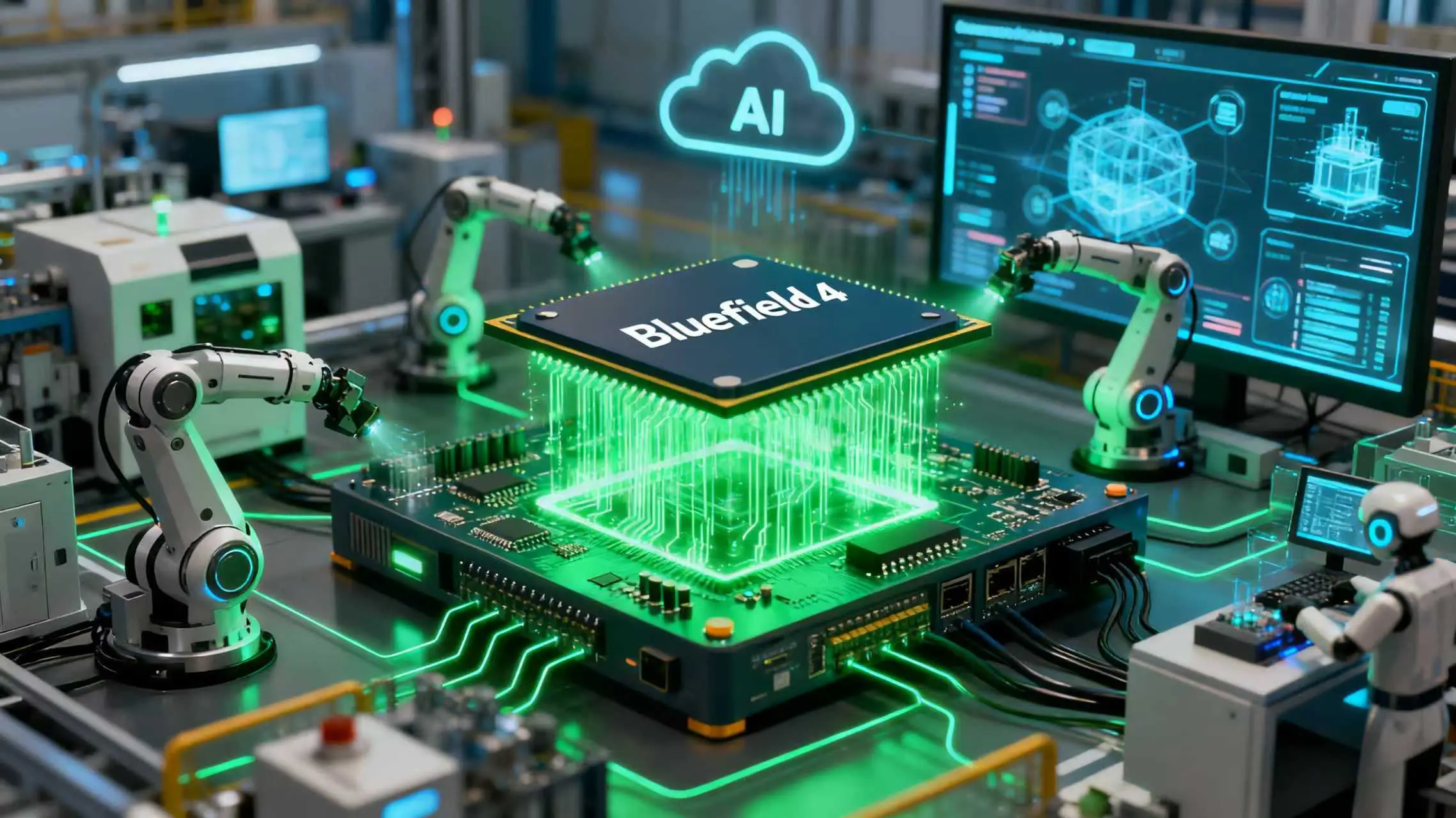
Addressing the needs of industrial intelligent transformation, NVIDIA simultaneously launched the Bluefield-4 processor, specifically designed for AI factory scenarios. As a next-generation product of the Data Center Infrastructure Processor (DPU), Bluefield-4 integrates powerful AI inference capabilities and high-speed network processing functions, enabling real-time data acquisition, analysis, and decision-making at industrial edge nodes, supporting core scenarios such as intelligent manufacturing, robot collaboration, and quality inspection. This processor can collaborate with NVIDIA's Isaac Sim simulation platform and Metropolis intelligent video analytics suite, providing manufacturing enterprises with end-to-end solutions from digital twin simulation to physical world execution, helping traditional factories transform into flexible and intelligent AI factories.
From the underlying interconnect technology of quantum computing to the ecosystem co-construction of 6G communication, and the hardware support of AI supercomputing and industrial chips, NVIDIA is building a vast ecosystem centered on accelerated computing, covering cutting-edge technologies and the real economy. In numerous public speeches, Jensen Huang has emphasized that "AI is reshaping every industry, and computing power is the core driving force of this transformation." Nvidia's series of strategic moves not only demonstrate its technological leadership but also reveal a global trend in the technology industry: the deep integration of quantum technology, AI, communications, and industrial applications will spur a new industrial revolution.
Industry analysts point out that Nvidia's strategic layout has transcended simple hardware product competition, shifting towards building a full-chain advantage in standards, ecosystem, and technological synergy. NVQLink establishes interconnect standards for quantum computing; its $1 billion investment in Nokia is expected to dominate the AI-RAN technology roadmap in the 6G era; and AI supercomputing and dedicated chips provide a solid hardware foundation for the ecosystem. These initiatives mutually reinforce each other, forming a virtuous cycle of "technological breakthroughs - ecosystem co-construction - industrial implementation," placing Nvidia in a favorable position in global technology competition.
With the commercialization of NVQLink, the continuous evolution of 6G technology, and the gradual construction of AI supercomputing, Nvidia is transforming from a chip supplier into a builder of a global technology ecosystem. In the future, the practical application of quantum computing will revolutionize drug development and new material innovation, AI-native 6G networks will reshape the boundaries between communication and computing, and AI factories will drive the intelligent upgrading of the manufacturing industry. With NVIDIA's technological empowerment, these scenarios are rapidly moving from concept to reality, injecting new momentum into global economic development. For the technology industry, NVIDIA's dual-pronged approach not only brings technological and product innovation but will also trigger a profound restructuring of the industry landscape, propelling the global technology industry into a new era of collaborative innovation.