









The 3rd National Cyber Defense and Security Exhibition was held in Malaysia, with the Chinese delegation showcasing cyber security achievements
From July 1 to 3, 2025, the third National Cyber Defense and Security Exhibition (CYDES 2025) was held at the Putrajaya International Convention Center in Malaysia. As the highest-level cybersecurity event in ASEAN, the exhibition attracted extensive participation from government departments, industry experts and well-known cybersecurity companies from many countries around the world, focusing on cutting-edge issues and development trends in the field of cybersecurity.
This year's CYDES 2025 was hosted by the Malaysian government and organized by the country's National Security Council (NSC) and the National Cybersecurity Agency (NACSA). The exhibition was themed "Advancing Cyber Resilience" and focused on hot areas such as national critical infrastructure protection, AI governance, quantum security, and operational technology system security. A series of heavyweight events were held, including the ASEAN Cybersecurity Leaders Roundtable, the Malaysian National Cybersecurity Strategic Forum, and the Regional Computer Emergency Response Cooperation Dialogue, etc., to build a high-level communication and cooperation platform for cybersecurity capacity building in ASEAN and the Asia-Pacific region.

The total exhibition area of the conference is over 7,800 square meters. More than 200 cybersecurity companies from around the world gathered together to showcase the latest products, solutions and technology applications, covering artificial intelligence, big data, IoT security, cloud security and other cutting-edge fields. It is expected that the three-day exhibition will attract more than 8,000 professional visitors and 1,200 registered representatives. In his speech at the opening ceremony, the Deputy Prime Minister of Malaysia said that cybercrime activities have been escalating in recent years, and security risks such as ransomware, supply chain attacks, and advanced persistent threats have continued to rise. Faced with the increasingly severe cyber threat situation, Malaysia must take decisive action. He emphasized that "Malaysia is currently accelerating the pace of national digital transformation and is committed to building a safe, reliable and inclusive digital ecosystem through top-level strategic planning." He pointed out that the planning route of the "Malaysian Cybersecurity Strategy (2025-2030)" sets a clear direction for the country's future development, and cybersecurity and digital security capacity building are an indispensable part of this strategy. As the rotating chair of ASEAN in 2025, Malaysia is actively promoting the upgrading of its cybersecurity industry and is committed to building an ASEAN cybersecurity community of shared destiny. By integrating regional security frameworks, unifying technical standards, and strengthening cross-border emergency response coordination, Malaysia strives to enhance ASEAN's overall cyber defense capabilities and lay a solid security foundation for the development of the regional digital economy.
It is worth mentioning that China Silk Road Group, as a national partner of the National Cyber Security Agency (NACSA) of Malaysia, led China's leading cyber security companies to form a strong Chinese exhibition group to appear at this year's CYDES, becoming a highlight of the exhibition. Exhibiting companies include Quantum Technology Yangtze River Delta Industrial Innovation Center, Qi'anxin, Beixinyuan, Yunshu Technology, Neusoft Group, Venusstar Group, etc., focusing on displaying China's latest achievements in independent innovation, practical application and international cooperation in cyber security. After the opening ceremony, the Deputy Prime Minister of Malaysia visited the Chinese exhibition area and highly praised the in-depth cooperation between China and Malaysia in the field of digital economy. He especially thanked Chinese companies represented by China Silk Road Group for their positive contributions to Malaysia's cyber security capacity building. He said that China-Malaysia cooperation not only demonstrates the deep foundation of mutual benefit and win-win between the two sides, but also injects strong impetus into the construction of ASEAN's cyber security community of shared future.
On the morning of July 2, the "China Zone Thematic Forum" hosted by China Silk Road Group and organized by Silk Road Boat was successfully held with the theme of "Building ASEAN Cybersecurity Resilience: China's Independent Practice Experience in Cybersecurity". In his speech, Chinese Ambassador to Malaysia Ouyang Yujing said that in the face of common challenges in the digital age, China is willing to work with Malaysia and ASEAN countries to continue to deepen strategic mutual trust, bridge the digital divide, promote multilateral governance, and jointly build a peaceful, secure, open and cooperative cyberspace community with a shared future. In his speech, YM Raja Dato Nushirwan Zainal Abidin, Director of the National Security Council of Malaysia, warmly welcomed the Chinese business delegation to the exhibition and highly praised the positive role played by China Silk Road Group as a national partner of the Malaysian Cybersecurity Agency. He mentioned that "Malaysia has launched the Malaysian Cybersecurity Strategy (2025-2030)", focusing on digital sovereignty, network resilience and innovation capabilities." He affirmed China's experience in the fields of independent cybersecurity technology, AI defense, post-quantum cryptography, etc., and looked forward to the two sides to carry out more in-depth and pragmatic cooperation in the fields of technical exchanges, standard co-construction, capacity building, etc., and jointly promote the improvement of ASEAN regional cybersecurity governance capabilities.
Yan Lijin, Chairman of China Silk Road Group, said in his speech that CYDES 2025 marks a new stage in regional strategic cooperation. This exhibition has set up a separate Chinese exhibition area for the first time, which is an important milestone for China and Malaysia to jointly build the "Digital Silk Road". In the face of global cybersecurity challenges, China Silk Road Group will adhere to the principle of "joint consultation, joint construction and sharing", work with Chinese companies to deepen digital cooperation, sow "digital seeds" that adapt to local needs, empower the development of ASEAN's digital economy with security codes, and inject momentum into the "new golden fifty years" of China-Malaysia relations.
In the corporate keynote speech session, Chinese companies shared with participants the achievements of China's cybersecurity industry in technology research and development, ecological construction, and standard setting around hot topics such as AI cybersecurity technology, intelligent threat detection, critical infrastructure protection, and data governance. Through practical case analysis, technical solution display and application experience exchange, enhance the influence of Chinese cybersecurity brands in the ASEAN market.
At this exhibition, various Chinese companies displayed a series of advanced technologies and products. With the theme of "Building the ASEAN Cybersecurity Defense Line", Beixinyuan fully demonstrated its strategic core businesses that are highly consistent with the exhibition's focus on key infrastructure protection, AI security, military defense and other fields, such as Xinyuan Secret AI All-in-One Machine, Military Self-organizing Network Equipment, Night Vision Equipment, Yuanxin Security Phone, Secret Black Box, etc., showing the technical strength of Chinese companies in the field of high-security communications and intelligent defense based on independent innovation. Beixinyuan was invited by China Silk Road Group to participate in the CYDES China Special Forum. Its Vice President Lin Shengyu gave a special speech on high-security communications and AI bases, which was highly recognized. After the meeting, many government department representatives went to the Linkdood booth for in-depth consultation on the secure AI base solution.
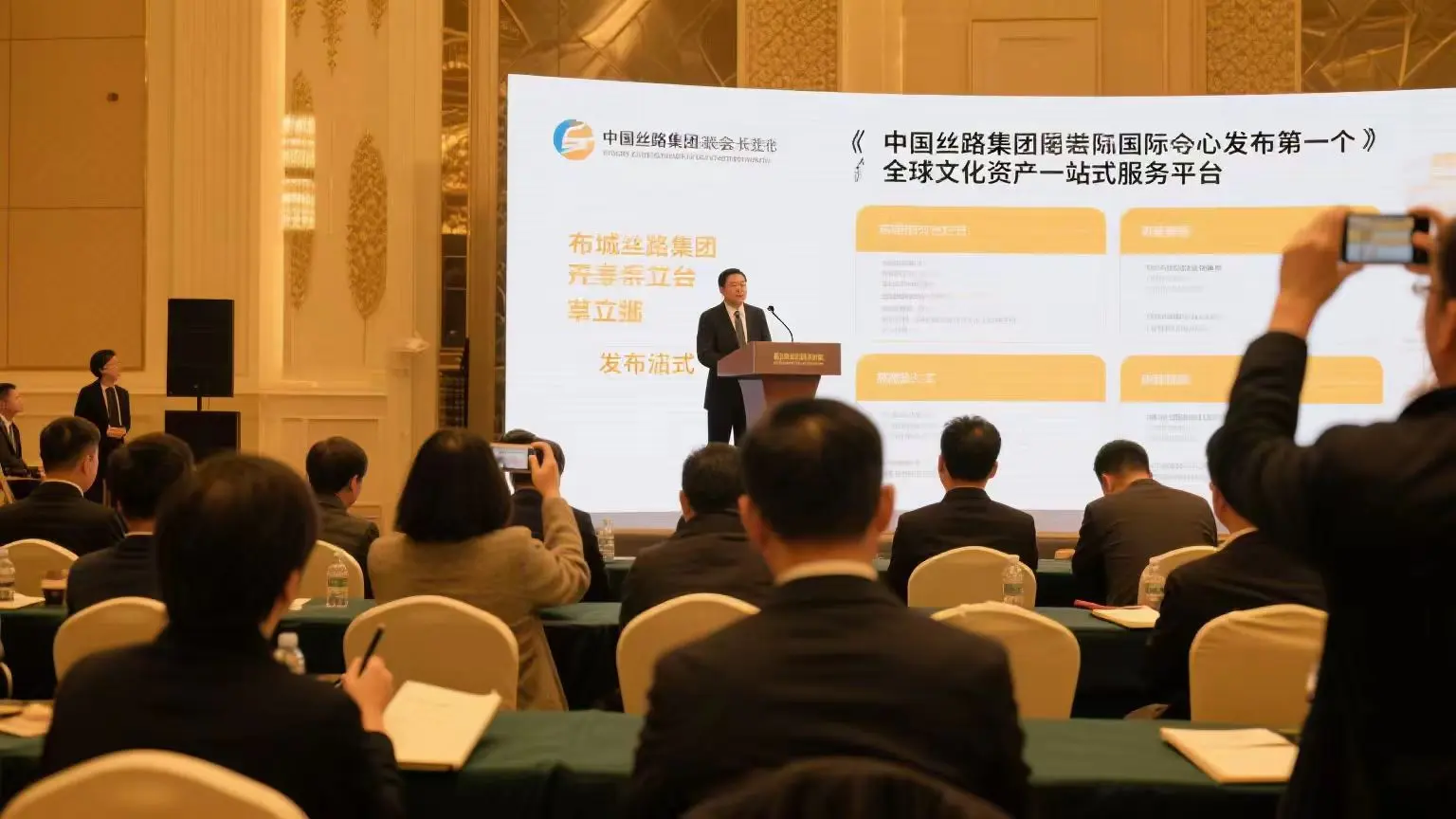
Yunshu Technology brought AI-driven cutting-edge cybersecurity technology to the China Special Forum and Exhibition. At the CYDES2025 China Special Forum held on the morning of July 2, Yunshu Technology officially released its self-developed "Five-Level Progressive Cybersecurity Service Model". The model relies on the AI security brain as an engine to achieve a leapfrog upgrade from passive response to active prediction and real-time protection. It is now widely used in many key industries such as government, finance, and energy. At this exhibition, Yunshu Technology simultaneously demonstrated a number of core solutions such as AI security governance, anti-quantum cryptography technology, supply chain security, and network resilience engineering. In particular, the privacy protection mechanism with cloud upgrade and local verification can help companies build a secure, private, and controllable knowledge system to effectively prevent data leakage risks. Malaysia's First Deputy Prime Minister Zahid and Chinese Ambassador to Malaysia Ouyang Yujing visited the Yunshu Technology booth to gain an in-depth understanding of the application of AI security technology in actual scenarios. Zahid highly recognized Yunshu Technology's technical strength and landing potential, and looked forward to deploying it locally in Malaysia as soon as possible to help improve the country's network security resilience. During the forum, Yunshu Technology and Malaysia's MIMA Company officially signed a memorandum of cooperation. The two sides will actively promote the local application of AI security technology and explore new cooperation models such as regional talent training and industrial ecosystem co-construction. In addition, China Silk Road Group also made important moves during the exhibition. Its chairman, Yan Lijin, officially launched the first "Global Cultural Assets One-Stop Service Platform" created by Silk Road Metaverse, a subsidiary of the group, at the Putrajaya International Convention and Exhibition Center, emphasizing that the platform "provides a Chinese solution to solve the pain points of difficult confirmation of ownership, limited circulation, and weak protection of global cultural assets". This important release became one of the focuses of the conference with the theme of "Promoting Cyber Resilience", perfectly echoing the core demands of cybersecurity. The Global Cultural Assets One-Stop Service Platform was jointly created by Silk Road Metaverse Ltd., a subsidiary of China Silk Road Group, Klickl Digital Group and MINAX Global Brand Exchange, demonstrating China's strength in the field of digital security technology. The platform is based on Web3.0 technology and integrates cutting-edge technologies such as blockchain, encryption algorithms, smart contract auditing, zero-knowledge proof and extended reality (XR) to build a global security infrastructure covering the entire life cycle of cultural asset confirmation, storage, trading, finance and governance. Its core value lies in reconstructing the global trusted circulation model of cultural assets with a data security mechanism that is "tamperproof, privacy controllable, and traceable throughout the process", marking that cultural assets have officially entered a new era of "trusted digitization".
The successful holding of the 3rd National Cyber Defense and Security Exhibition (CYDES 2025) has provided a valuable opportunity for exchanges and cooperation in the field of global cybersecurity. The wonderful appearance of the Chinese exhibition group not only demonstrated China's strong strength and innovative achievements in the field of cybersecurity, but also contributed Chinese wisdom and strength to promoting the construction of a more secure, stable and prosperous global cyberspace. With the continuous deepening of cooperation between China and Malaysia and between China and ASEAN in the field of cybersecurity, it is expected that more pragmatic results will be achieved in technological innovation, talent training, industrial development, etc. in the future, and we will jointly respond to increasingly complex cybersecurity challenges and safeguard the development of regional and global digital economy.